AI Voice Cloning: Your Digital Twin Is Just 5 Seconds Away
We explore the incredible technology that can clone a voice from a 5-second sample, delving into its creative uses and the terrifying risks of scams and fake news.
This opinion piece was drafted with AI assistance under the editorial direction of Rohan Mehta and reviewed before publication. Views expressed are the author's own.
I got a call the other day from an unknown number. The voice on the other end was frantic. It was a close friend, or at least it sounded exactly like him, claiming he was in trouble and needed money transferred immediately. My heart jumped. For a split second, every instinct screamed to help. But then, a tiny, cold thread of doubt entered my mind. The phrasing was just a little… off. I hung up and immediately called my friend back on his saved number. He was fine, sitting at his desk, completely unaware. It was a scam. A close call. But what terrified me wasn't the attempt itself, but the authenticity of the voice. It wasn't a stranger; it was a digital ghost wearing my friend's voice as a mask.
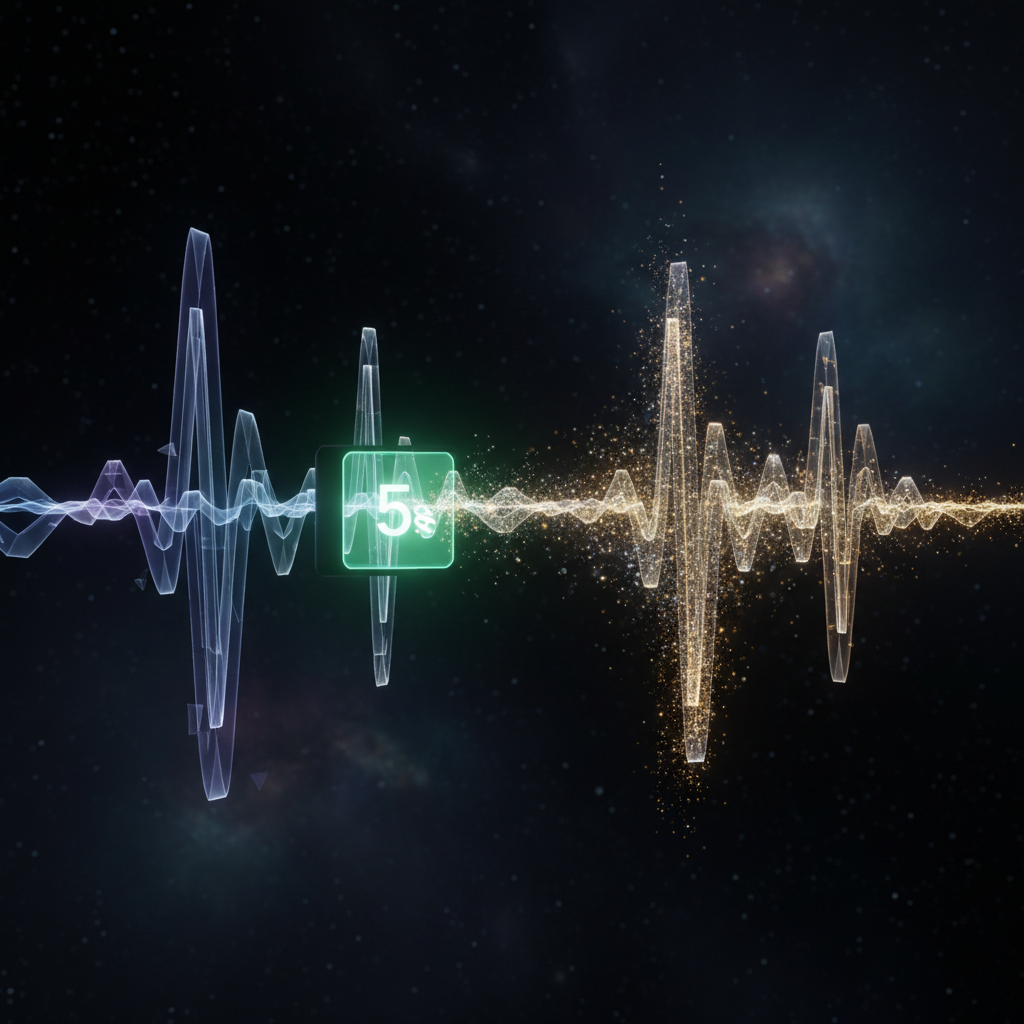
This is the new reality of AI voice cloning. As an editor at Pulse AI, I've been tracking this technology for years, from its clumsy, robotic beginnings to what it is today: a tool so powerful it can create a near-perfect replica of your voice from a sample as short as a single sentence. That social media clip you posted? The voice note you sent on WhatsApp? That’s more than enough raw material. The five-second threshold isn't a marketing gimmick; it's a technical reality.
Let's unpack how this magic trick, or nightmare, depending on your perspective, actually works. At its core, modern voice cloning relies on a type of AI called a generative model, often coupled with what's known as 'zero-shot' or 'few-shot learning'. Think of it like a master mimic who has spent a lifetime studying the nuances of human speech. This AI is trained on a massive dataset—thousands of hours of audio from countless different speakers, accents, and languages. It learns the fundamental components of speech: pitch, timbre, cadence, rhythm, anacrusis, the tiny, almost imperceptible breaths we take between words.
Once it has this deep, foundational understanding of 'voice' as a concept, the 'few-shot' part comes into play. When you provide it with a short sample of a new voice—your voice—it doesn’t need to learn everything from scratch. Instead, it uses its vast prior knowledge to analyze the unique characteristics of your specific vocal signature. It identifies your personal 'vocal fingerprint' and then uses that fingerprint as a guide to generate new speech. It’s not just stitching sounds together like an old-school text-to-speech engine. It's generating entirely new audio that carries the essence of the original speaker.
Early versions of this required large amounts of clean, studio-quality audio. But the models have become frighteningly efficient. They can now filter out background noise, isolate the target voice, and perform the cloning process with just a few seconds of input. This is why a simple phone call or a publicly available video is enough. The barrier to entry has effectively vanished. Companies like ElevenLabs, Resemble AI, and a host of open-source projects have put this power, for better or worse, into the hands of anyone with a computer.
Before we descend into the inevitable dystopian concerns, it's only fair to acknowledge the incredible creative and humanitarian potential here. The applications are genuinely thrilling. Imagine an audiobook of your favorite novel, but instead of a stranger's voice, it's read by your mother or father. For a child whose parents travel for work, a bedtime story read in a familiar voice could be a profound comfort. For someone who has lost a loved one, having the ability to hear their voice again, reading a poem or a letter, could be a powerful, albeit complex, tool for grieving.
In the world of entertainment, the implications are huge. A film could be dubbed into any language, not with a generic voice actor, but using a cloned version of the original actor's voice, preserving the performance's integrity. Video game characters could have dynamic, responsive dialogue that always sounds authentic. I recently tried a demo where I had a conversation with a historical figure, their voice cloned from old radio recordings. The experience was immersive in a way that text simply cannot replicate.
There are also vital applications in accessibility. Individuals who have lost their ability to speak due to illnesses like ALS or throat cancer can now have a unique, personalized digital voice, cloned from old recordings, instead of the generic, robotic voice we're all familiar with. It's about restoring a piece of their identity, a fundamental part of what makes them human. This isn't science fiction; it’s happening right now, providing dignity and a means of connection.
But as my near-miss with that scam call illustrates, for every utopian dream, there is a dystopian shadow. The same technology that can comfort a child can be used to terrorize a parent. The phone scam I experienced is just the tip of the iceberg. We are already seeing cases, particularly here in India, where criminals use voice clones to impersonate family members in fake kidnapping or accident scenarios, creating a level of panic and believability that is difficult to resist in the moment.
This is where the Indian context becomes particularly volatile. Our country's incredible linguistic diversity, a source of cultural richness, also becomes a vector for attack. A scammer in, say, Noida, can clone the voice of a CEO in Chennai from an English-language interview on YouTube. They can then use that cloned voice to generate a fraudulent request in flawless, colloquial Tamil to an employee in the finance department. The employee hears their boss's exact voice, speaking their own mother tongue, lending the request an unprecedented layer of authority and trust. The potential for sophisticated financial fraud and social engineering is staggering.
And then there's the looming specter of misinformation, especially in our politically charged environment. We've seen text-based fake news on WhatsApp and doctored images on social media. Now, imagine an audio clip circulating a day before a state election. It's the voice of a prominent community leader, a voice everyone trusts, seemingly endorsing a rival candidate or, worse, spreading inflammatory lies designed to incite violence. The audio is a deepfake, but it sounds real. By the time it's debunked, the damage is done. Trust, once broken by the sound of a familiar voice, is incredibly hard to repair.
This erosion of trust is perhaps the most profound danger. Our voices are intimately tied to our identity. It's how we express love, anger, and vulnerability. It's a biometric marker we instinctively believe to be unique and inimitable. When that fundamental belief is shattered, what can we trust? Every call from an unknown number, every voice note from a friend, will have to be met with a degree of suspicion. The social fabric is woven with threads of trust, and AI voice cloning is a very sharp pair of scissors.
So, where do we go from here? Railing against the technology itself is a futile exercise. The genie is out of the bottle. The solution has to be multi-pronged. The companies developing these tools have a responsibility to build in safeguards. Many are working on 'audio watermarking'—an inaudible signal embedded in the AI-generated audio that can identify it as synthetic. AI detection models are also in a constant arms race with the generation models, trying to learn how to spot the fakes.
But technology alone won't save us. The most powerful defense is a societal one: radical, widespread public awareness. We need to cultivate a culture of healthy skepticism. We need to teach ourselves and our elders the 'call back' rule: if you get a frantic call asking for money or sensitive information, hang up and call the person back on their known number. We need to treat unexpected audio clips circulating online with the same suspicion we now reserve for outlandish text messages.
This is a paradigm shift in how we interact with the digital world, and it won't be easy. For generations, hearing was believing. Now, we must learn to question what we hear, to cross-reference, to verify. The burden, unfairly, falls on us, the potential victims. It is a new, and exhausting, form of digital literacy we must all learn.
Ultimately, voice cloning technology is a mirror. It reflects our own nature. It can be a tool for connection, art, and healing. It can also be a weapon for fraud, manipulation, and chaos. We are standing at the very beginning of this new audio reality, and the choices we make now—as technologists, as regulators, and as a society—will determine which reflection stares back at us in the years to come. For my part, I'll never again take a voice at face value.
Why it matters
- 01Modern AI can clone a realistic human voice from just a few seconds of audio, making the technology widely accessible.
- 02Voice cloning has immense creative and accessibility benefits, from personalized audiobooks to giving a voice to those who have lost theirs.
- 03The primary dangers are highly convincing scams, political misinformation, and a fundamental erosion of trust in what we hear.