FBI Seizes NetNut Proxy Platform, Popa Botnet
The FBI's seizure of NetNut's domains marks a turning point in the regulation of the residential proxy market and its links to illicit botnets.
This article is original editorial commentary written with AI assistance, based on publicly available reporting by Krebs on Security. It is reviewed for accuracy and clarity before publication. See the original source linked below.
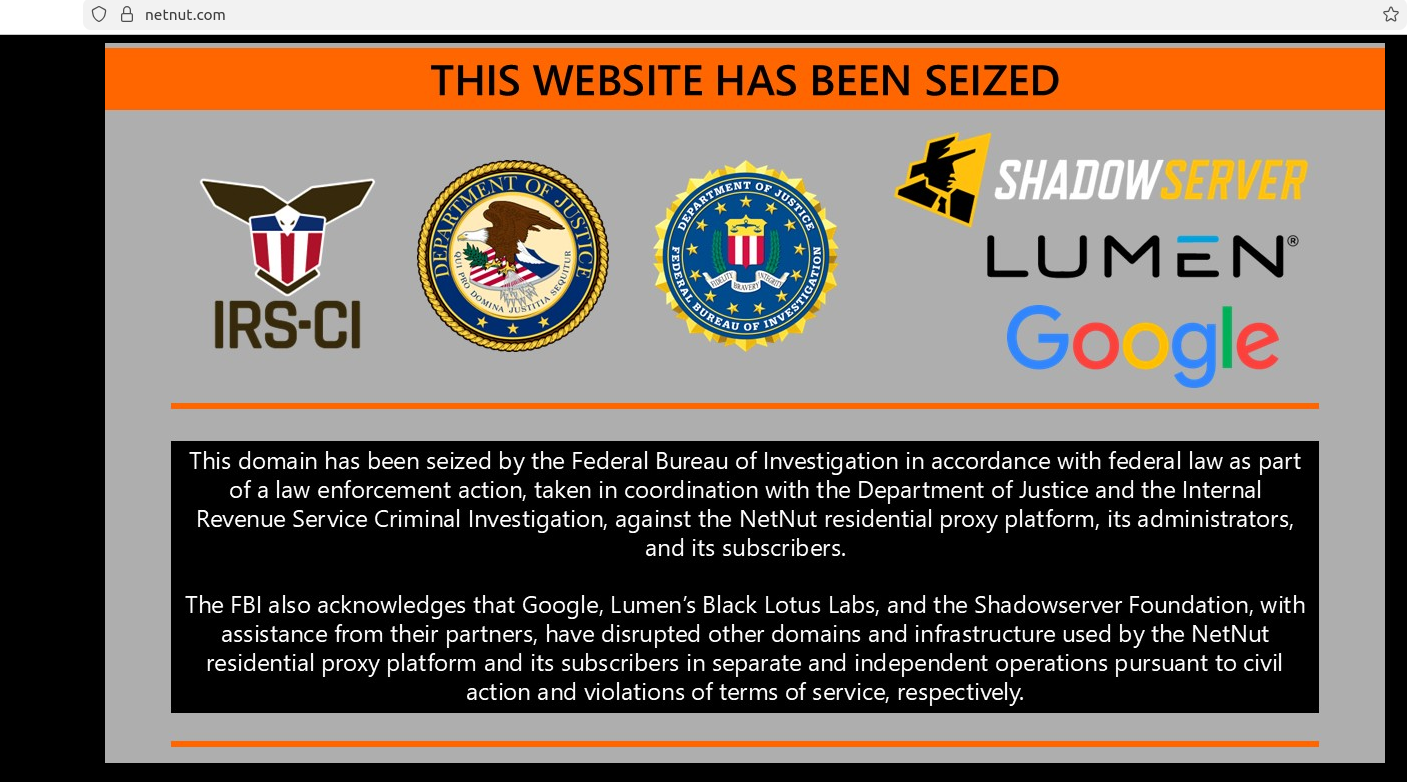
The Federal Bureau of Investigation’s recent seizure of hundreds of domains linked to NetNut represents a watershed moment in the law enforcement crackdown on the "grey market" of residential proxy services. NetNut, a prominent platform operated by the Israeli-based, NASDAQ-listed Alarum Technologies, has faced intense scrutiny following revelations that its infrastructure was deeply intertwined with the Popa botnet. This enforcement action, conducted alongside private sector partners, aims to dismantle a massive network of compromised devices that functioned under the guise of a legitimate enterprise tool.
Historically, the residential proxy industry has occupied a precarious legal position. These services allow clients to route web traffic through the IP addresses of everyday home users, making the activity appear domestic and authentic. While marketed for benign purposes like price comparison, ad verification, and market research, the underlying mechanics often rely on "sneaky" software delivery. The recent KrebsOnSecurity investigation served as a catalyst, identifying that NetNut’s network was fueled by the Popa botnet—a sophisticated malware operation that compromised over two million devices globally to provide the bandwidth NetNut sold to its subscribers.
The technical mechanics of this operation highlight a disturbing convergence between corporate infrastructure and criminal botnets. Residential proxies typically source their IP addresses through SDKs embedded in free software or mobile apps, where users inadvertently consent to share their bandwidth. However, the Popa botnet interaction suggests a more direct and malicious pipeline. By utilizing malware-infected devices, these services can scale to millions of nodes without the overhead of user acquisition. When the FBI seized NetNut’s domains, they effectively severed the command-and-control links that allowed this illicitly captured bandwidth to be monetized on the open market.
For the broader technology industry, the implications are profound. This action signals that "publicly traded" status no longer offers a shield against federal intervention if a company’s supply chain is rooted in cybercrime. Alarum Technologies now faces significant reputational and financial risk, as the seizure directly targets the operational core of its most profitable subsidiary. This move also warns other proxy providers—such as Bright Data or Oxylabs—that the Department of Justice is increasingly willing to pierce the corporate veil to address the systemic abuse of residential IP space.
From a regulatory standpoint, this event underscores the urgent need for transparency in the proxy market. If a service cannot verify the informed consent of every node in its network, it risks being classified as a criminal facilitator. We are likely to see a shift toward "Know Your Peer" (KYP) standards, similar to the banking industry's KYC requirements. Law enforcement's ability to coordinate with cybersecurity firms to map these networks suggests that the feedback loop between investigative journalism, private threat intelligence, and federal action is becoming more efficient and lethal to botnet-reliant business models.
Looking forward, the industry must watch for two primary developments: the legal defense mounted by Alarum and the migration patterns of the remaining Popa botnet infrastructure. Botnets are notoriously resilient, and the seizure of specific domains may only result in a temporary disruption rather than a total collapse. Furthermore, the fallout from this case will likely prompt a re-evaluation of how institutional investors view the "alternative data" sector. As the line between legitimate web scraping and state-sponsored or criminal cyber activity continues to blur, the FBI’s intervention in the NetNut case serves as a definitive marker that the era of looking the other way is over.
Why it matters
- 01The FBI's intervention signals a new era of enforcement where publicly traded companies can be targeted for hosting infrastructure tied to malicious botnets.
- 02Residential proxy services are under intense pressure to prove informed consent from users, as law enforcement targets platforms masking malware-driven traffic.
- 03The seizure of NetNut's domains effectively disrupts a supply chain that monetized over two million compromised devices for corporate data scraping.