My Matches Use AI for Pickup Lines. It’s Hilariously Awful.
I'm seeing more AI-written bios and openers on Indian dating apps. From cheesy poetry to generic praise, it's a hilarious mess that kills any real spark.
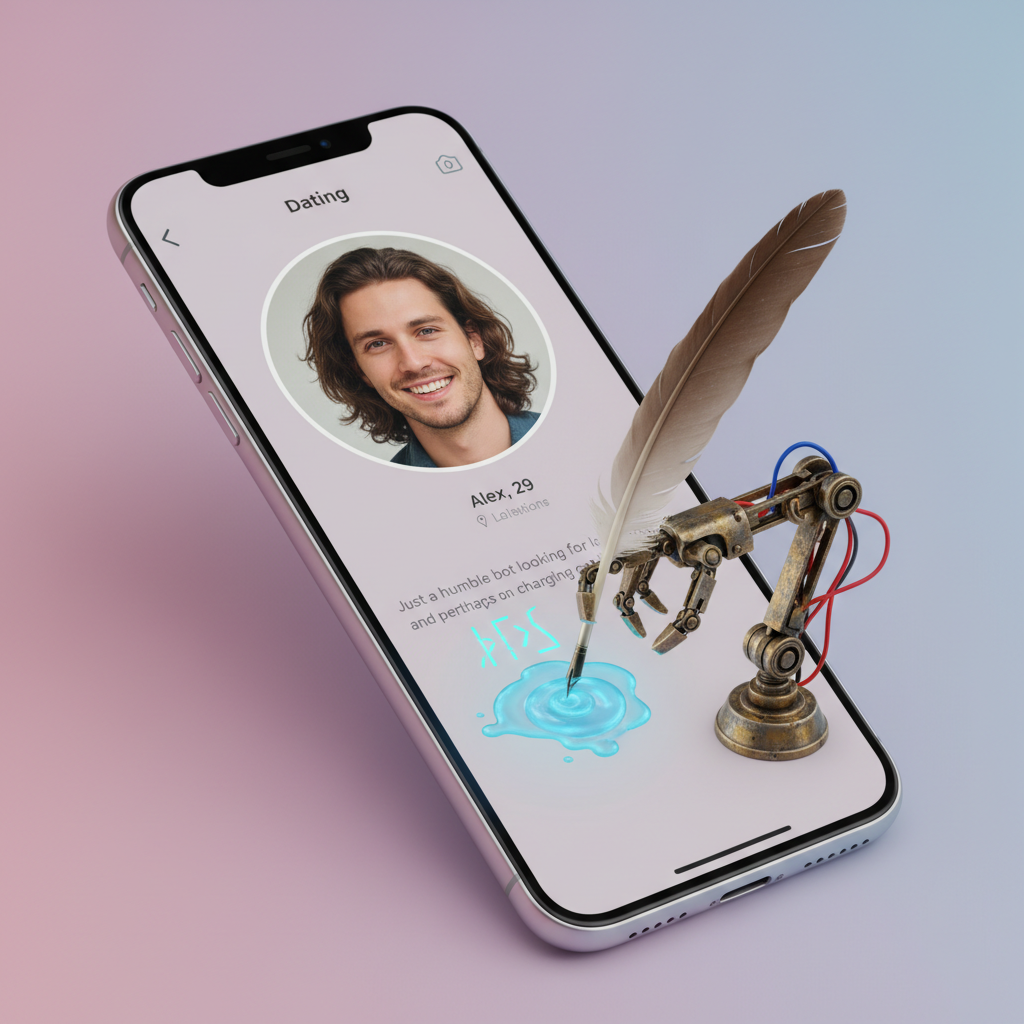
This opinion piece was drafted with AI assistance under the editorial direction of Rohan Mehta and reviewed before publication. Views expressed are the author's own.
It started a few months ago, somewhere between a Hinge match in Bangalore and a Bumble conversation in Mumbai. I’m Rohan, and by day, I edit articles about artificial intelligence at Pulse AI. By night, I, like many other single people in urban India, navigate the strange, often bewildering world of dating apps. For a while, the experience was predictable: the ghosting, the bios that just said ‘sapiosexual’, the endless photos with tigers in Thailand. But then, a new species of profile began to emerge.
The first one that truly stopped me in my tracks was an opener from a woman whose profile was a pleasant mix of art gallery visits and photos of her golden retriever. The message arrived, and it read: “Salutations. Your profile radiates a captivating aura of intellect and whimsy that I find utterly compelling. Might you be amenable to exploring this burgeoning connection over a stimulating conversation?”
I laughed out loud. Salutations? Captivating aura? It was like a Victorian novelist had possessed a 26-year-old graphic designer. Working with AI, I’ve developed a sixth sense for machine-generated text. It has a certain flavour—a touch too perfect, a little too formal, and completely devoid of the chaotic, typo-ridden energy of a real human typing on a phone. This was ChatGPT, verbose mode.
I replied, “Was that written by an AI?” She unmatched me instantly. I guess I’d found a sore spot.
Since then, the floodgates have opened. It seems a significant portion of the dating pool has decided to outsource their ‘rizz’ to a large language model. The results are, as the kids say, a vibe killer. They range from the hilariously awful to the deeply, soul-crushingly generic. I’ve started collecting them, like a cynical digital botanist cataloging strange new weeds.
There’s the Poetic Bot. This one tries to be romantic but ends up sounding like a low-budget Shah Rukh Khan movie from the 90s. I received a message last week that said, “Your smile, like the first ray of dawn over the Western Ghats, promises a new and beautiful beginning. Tell me, what story does it hide?” My story, my friend, is that I just thought of a funny meme. There’s no epic poem here. A simple “nice smile” would have done the job, and I wouldn’t have felt like I was being serenaded by a Roomba with a thesaurus.
The second category is the Corporate Compliment Bot. This one is less poetic and more like a performance review. “I’m impressed by your dedication to your career as noted in your bio, coupled with a demonstrated interest in personal wellness. The synergy is intriguing.” Synergy? Are we talking about a first date or a corporate merger? It feels like the person just copy-pasted my bio into a prompt that said, “Write a professional yet flirty opening line.” The result is sterile and makes me feel like I should prepare a PowerPoint presentation about my five-year plan.
And then there are the bios themselves. You can spot them a mile away. They have a distinct, structured quality. “An avid traveller with a penchant for spontaneous adventures. My passions include exploring hidden culinary gems, losing myself in a good book, and engaging in deep, meaningful conversations. Seeking a partner-in-crime who is emotionally intelligent, has a great sense of humour, and isn’t afraid to challenge the status quo.”
It sounds good, right? Almost too good. It’s the vanilla ice cream of dating profiles. It’s so perfectly optimised with all the right buzzwords—’meaningful conversations’, ‘emotionally intelligent’—that it has no personality at all. It tells me nothing about the actual person behind the screen, other than the fact they know how to use a prompt. The messy, specific, and often weird details that make a person interesting are sanded down and polished into a generic, marketable package.
I get the temptation, I really do. The pressure on dating apps is immense, especially in a place like India, where the sheer volume of people can feel overwhelming. You have to be witty, charming, and original, all in the first few lines of text, to stand out from hundreds of other profiles. It’s exhausting. Using AI feels like a shortcut, a way to hack the system of attraction. It’s the romantic equivalent of buying a pre-made meal because you’re too tired to cook.
Curiosity got the better of me. I logged into my work account and opened up a chatbot. I found a profile of a woman who mentioned she loved indie cinema and baking. I typed, “Write a charming opening line for a girl on a dating app. Her bio says she likes indie cinema and baking.”
The AI delivered instantly: “Hey! Your taste in indie cinema is seriously cool. If you can appreciate a complex plot, I bet your baking is just as layered and delightful. What’s your signature bake?”
It’s… fine? It’s competent. Grammatically perfect. It hits the right notes. But it’s not from me. My actual first thought was, “I wonder if she’s seen ‘The Lunchbox’. I should ask her.” That thought is simpler, less clever, but it’s genuine. It’s a real window into my brain. The AI-generated line is a polished window into nothing.
This is the crux of the problem. Flirting, in its purest form, is a game of vulnerability. You’re putting a little piece of yourself out there, a genuine thought or feeling, and hoping the other person responds positively. When we outsource that initial step to a bot, we’re not really connecting. We’re sending our robotic emissaries to meet on the digital battlefield, hoping they’ll soften each other up enough for us humans to safely step in later. We’re starting a potential relationship with a layer of polite, optimised fiction.
We’re creating a world of generic, low-stakes ‘rizz’ that everyone can see through. It’s like everyone showing up to a party wearing the exact same outfit from the most popular store. We all just blend into a beige wall of algorithm-approved pleasantries. The initial spark, that quirky, unpredictable chemistry that makes you actually want to meet someone, is extinguished before it even has a chance to catch fire.
Last week, I got a message that was a complete departure from the AI-generated noise. It was in response to a picture of me on a trek. It just said, “Whoa that looks steep. Did you complain the whole way up like I would have?”
It wasn't poetic. It wasn't a corporate compliment. It had a hint of self-deprecation and a genuine question. It was, in a word, real. It made me smile a real smile, not an eye-rolling one. My reply was easy and natural. We’re getting coffee next week.
That’s what I’m holding out for. The imperfect, the awkward, the slightly clumsy attempts at connection that are so much more compelling than a perfectly crafted paragraph from a bot. I’m tired of talking to algorithms. I want to talk to a person, with all their glorious, un-optimised, human messiness. So, if your opener sounds like it was co-written by a poet laureate and a marketing intern, I’m swiping left. Give me a typo, a bad joke, a simple ‘hello’—give me something real.
Why it matters
- 01AI-generated openers on dating apps are often easy to spot and create a humorous but ultimately off-putting experience.
- 02Outsourcing flirtation to AI leads to generic, soulless interactions that hinder the potential for a genuine connection.
- 03Authenticity and even awkwardness in an opening message are far more attractive than a perfectly crafted but impersonal line from a bot.