Name That Toon: Mark of (Cybersecurity) Progress
Reviewing 20 years of cybersecurity evolution, from simple antivirus to AI-driven defense, and the persistent human challenges in the digital age.
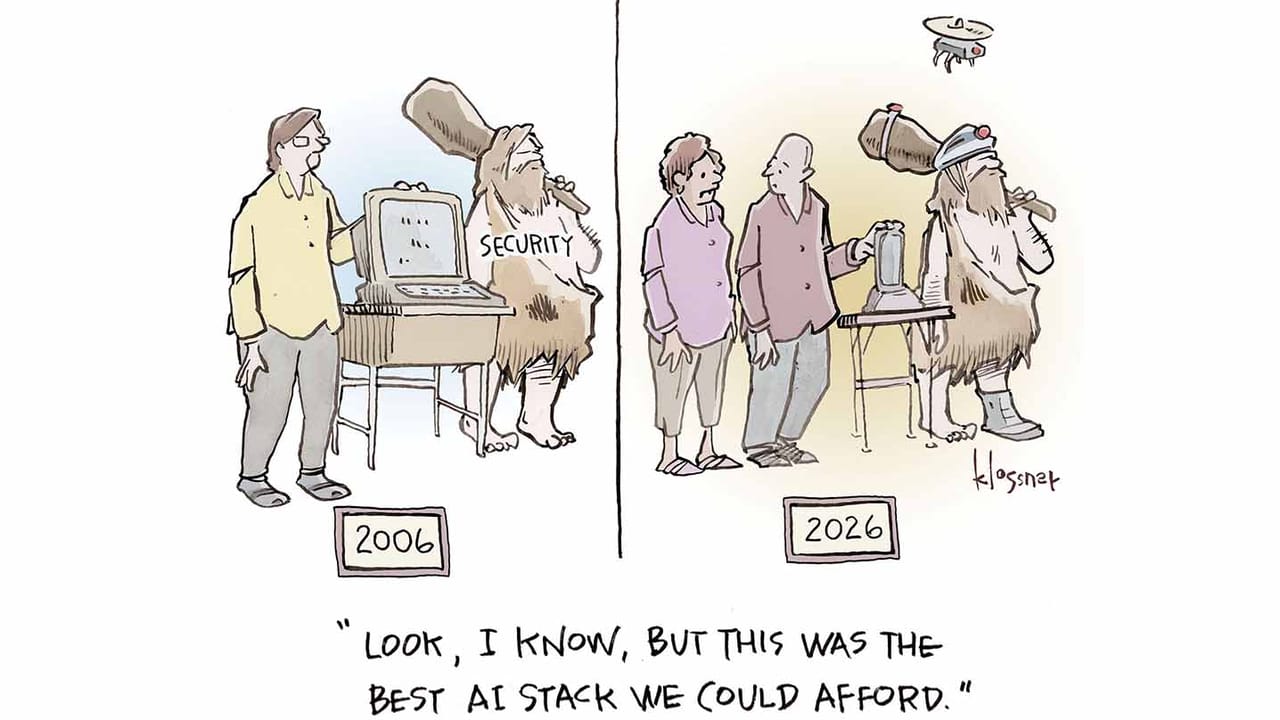
This article is original editorial commentary written with AI assistance, based on publicly available reporting by Dark Reading. It is reviewed for accuracy and clarity before publication. See the original source linked below.
The landscape of information security has undergone a radical transformation over the past twenty years, evolving from a niche IT concern into a cornerstone of global geopolitical and economic stability. As the industry reflects on two decades of growth, the central narrative is no longer just about the sophistication of code, but the persistent friction between technological advancement and human fallibility. What began as a battle against disruptive worms and basic malware has ballooned into a multifaceted war involving state-sponsored actors, ransomware syndicates, and a sprawling attack surface that now includes everything from cloud infrastructure to the handheld devices that track our every move.
In the early 2000s, the cybersecurity perimeter was relatively well-defined. Organizations focused on hardening the "castle walls" through firewalls and signature-based antivirus software. The threats of that era, while significant, were often chaotic and motivated by notoriety rather than systematic profit. However, the professionalization of cybercrime—facilitated by the rise of cryptocurrency and the proliferation of "as-a-service" business models—changed the mechanics of the industry. Today, defense is less about preventing entry and more about continuous monitoring and rapid response, reflecting a shift in philosophy toward zero-trust architectures and the assumption of breach.
The technical mechanics of this shift have been driven by an arms race in automation. As defenders deployed machine learning to sift through petabytes of log data, attackers leveraged the same technologies to automate phishing campaigns and discover zero-day vulnerabilities at scale. This escalation has moved the "Mean Time to Detect" (MTTD) and "Mean Time to Respond" (MTTR) metrics to the forefront of executive concerns. Cybersecurity is no longer a department that says "no" to innovation; it is a risk management function that must balance the need for speed in a digital economy with the requirement to protect sensitive customer data and critical intellectual property.
From an industry perspective, the last two decades have seen the emergence of a massive, fragmented marketplace of security vendors, alongside a shifting regulatory environment. Governments around the world have moved from a hands-off approach to enacting stringent mandates like GDPR and the SEC’s new disclosure rules. These regulations have forced cybersecurity out of the server room and into the boardroom, making CISOs (Chief Information Security Officers) key strategic partners. Yet, despite trillions of dollars in cumulative spending, the industry still struggles with a persistent talent gap and the reality that a single misconfigured cloud bucket or a social engineering trick can bypass the most expensive layers of defense.
The implications for the future suggest that the next twenty years will be defined by the integration of artificial intelligence and the looming specter of quantum computing. We are entering an era where biological and digital identities are inextricably linked, placing a higher premium on privacy and data integrity than ever before. As AI enables more convincing deepfakes and automated social engineering, the industry’s greatest challenge remains the "human element"—the psychological and behavioral factors that technology alone cannot solve.
As we look toward the horizon, the focus will likely shift from standalone security tools to "resilience by design." This means building systems that are not just hard to break, but easy to fix when they inevitably do. Industry watchers should keep a close eye on the consolidation of security platforms, the standardization of software bills of materials (SBOMs), and the ongoing debate over liability for software manufacturers. The progress of the last twenty years has been monumental, but as the digital and physical worlds continue to merge, the stakes for securing our collective future have never been higher.
Why it matters
- 01The cybersecurity industry has transitioned from a perimeter-focused 'defense' model to a continuous, data-driven 'resilience' framework necessitated by a 24/7 global threat landscape.
- 02Regulatory pressure and the professionalization of cybercrime have elevated security from a technical hurdle to a critical board-level business risk and compliance priority.
- 03Technological advancements like AI are serving as a double-edged sword, empowering both sophisticated defensive automation and more convincing, large-scale social engineering attacks.