Users cry foul after AMD stripped memory crypto from its consumer CPUs
AMD faces backlash for removing Transparent Secure Memory Encryption (TSME) from consumer Ryzen CPUs, raising concerns over security and market segmentation.
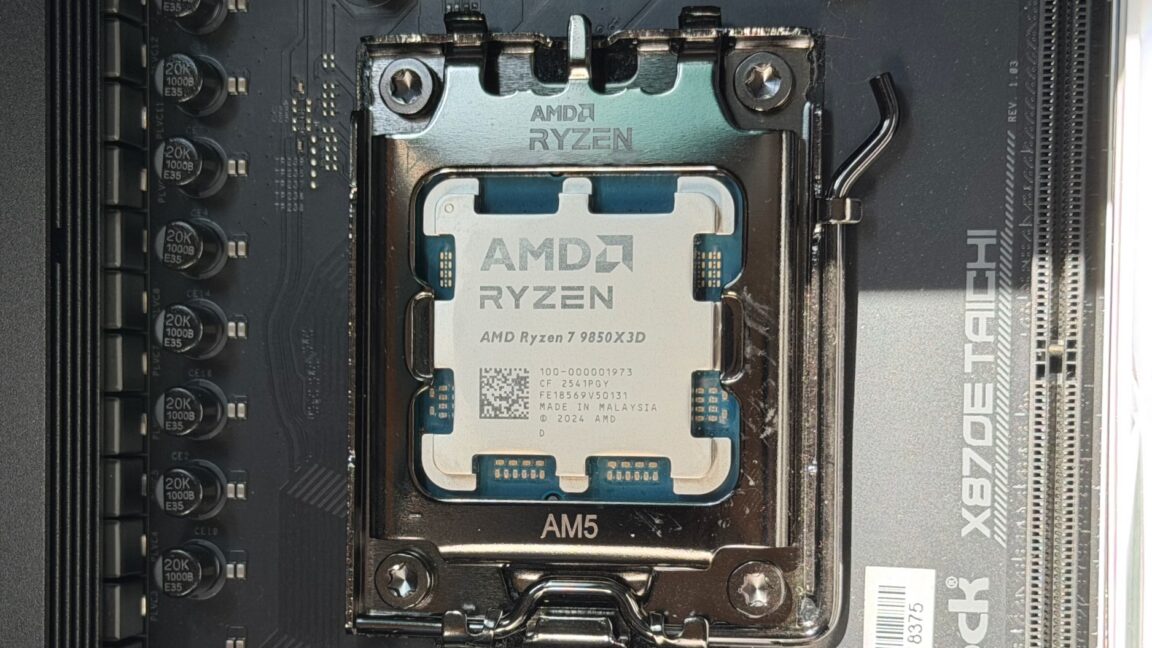
This article is original editorial commentary written with AI assistance, based on publicly available reporting by Ars Technica. It is reviewed for accuracy and clarity before publication. See the original source linked below.
Advanced Micro Devices (AMD) recently sparked a firestorm of criticism within the hardware enthusiast and security communities following the quiet removal of Transparent Secure Memory Encryption (TSME) from its consumer-grade Ryzen processors. For years, this feature—which encrypts data residing in the system RAM to protect against physical hardware attacks—was a staple of the Ryzen lineup, often serving as a key differentiator for users who prioritized privacy and security without jumping to enterprise-level hardware. The sudden disappearance of TSME from the latest consumer iterations reflects a technical shift that has left many power users feeling blindsided by a lack of transparency.
To understand the weight of this change, one must look at the historical positioning of AMD’s architecture. Traditionally, AMD gained significant goodwill by offering features in its consumer chips, like ECC (Error Correction Code) memory support and TSME, that its primary competitor, Intel, strictly reserved for its high-priced Xeon or "vPro" enterprise lines. TSME is particularly vital for mitigating "cold boot" attacks, where an adversary with physical access to a machine can extract sensitive data, such as encryption keys, directly from the memory modules. By including this in the standard Ryzen stack, AMD marketed its silicon as a superior choice for security-conscious developers and privacy advocates.
The mechanics of TSME are elegantly straightforward yet computationally demanding. It utilizes a dedicated hardware AES engine integrated into the memory controller to encrypt and decrypt data as it moves between the CPU and the RAM. Because the encryption happens at the hardware level, it is "transparent" to the operating system and applications, requiring no specialized software patches to function. However, maintaining this feature carries engineering costs and can impact memory latency. By stripping it from consumer silicon, AMD is likely looking to simplify its chiplet designs and reduce validation overhead for its mainstream products, effectively drawing a harder line between its consumer Ryzen chips and its enterprise-focused Ryzen Pro and EPYC lineups.
From a market perspective, this move signals a pivot toward aggressive market segmentation. In the semiconductor industry, "feature binning" is a common strategy used to force high-value customers toward more expensive SKUs. By moving TSME exclusively to the "Pro" branded chips, AMD is following a roadmap perfected by Intel—segmenting the market not just by core counts and clock speeds, but by security architecture. This creates a dilemma for small-business owners and independent researchers who now face a "security tax," forced to pay a premium for Pro-series motherboards and CPUs just to retain a feature that was previously standard.
The implications for the broader industry are concerning, particularly regarding the precedent of "silent" feature removal. When a manufacturer alters the fundamental security capabilities of a product line without a public announcement or updated documentation, it erodes the trust of the "prosumer" base. This demographic often serves as the unofficial marketing arm for chipmakers, influencing corporate procurement through their technical endorsements. By alienating this group, AMD risks a reputational blowback that could outweigh any marginal savings gained from simplified hardware validation. Furthermore, it raises questions about whether other advanced features, such as virtualization optimizations, might be next on the chopping block.
Looking forward, the tech community will be watching closely to see if AMD issues a formal justification or, under pressure, restores the feature in future microcode updates. If AMD holds its ground, expect a shift in the secondary market as users seek out older, fully-featured Zen architectures. More importantly, this development may invigorate the push for open-silicon initiatives like RISC-V, as users grow increasingly weary of the proprietary "black box" decisions made by major chip manufacturers. For now, the Ryzen brand stands at a crossroads: it must decide if its future lies in being the transparent, "user-first" alternative or if it will finalize its transformation into a mirror image of the rigid corporate structures it once sought to disrupt.
Why it matters
- 01AMD has removed Transparent Secure Memory Encryption (TSME) from its mainstream Ryzen CPUs, sparking backlash over a lack of transparency and reduced physical security.
- 02The move highlights an industry shift toward aggressive market segmentation, forcing security-conscious users to pay a premium for enterprise-grade 'Pro' hardware.
- 03By stripping features once standard in the consumer stack, AMD risks alienating the enthusiast community that helped the brand gain market share against Intel.