AI Gave Me My Grandfather's Voice. It Was a Beautiful Mess.
My grandfather spoke a rare Konkani dialect that is now fading. This is the story of how we used AI voice cloning to preserve it, and what we found in the flawed result.
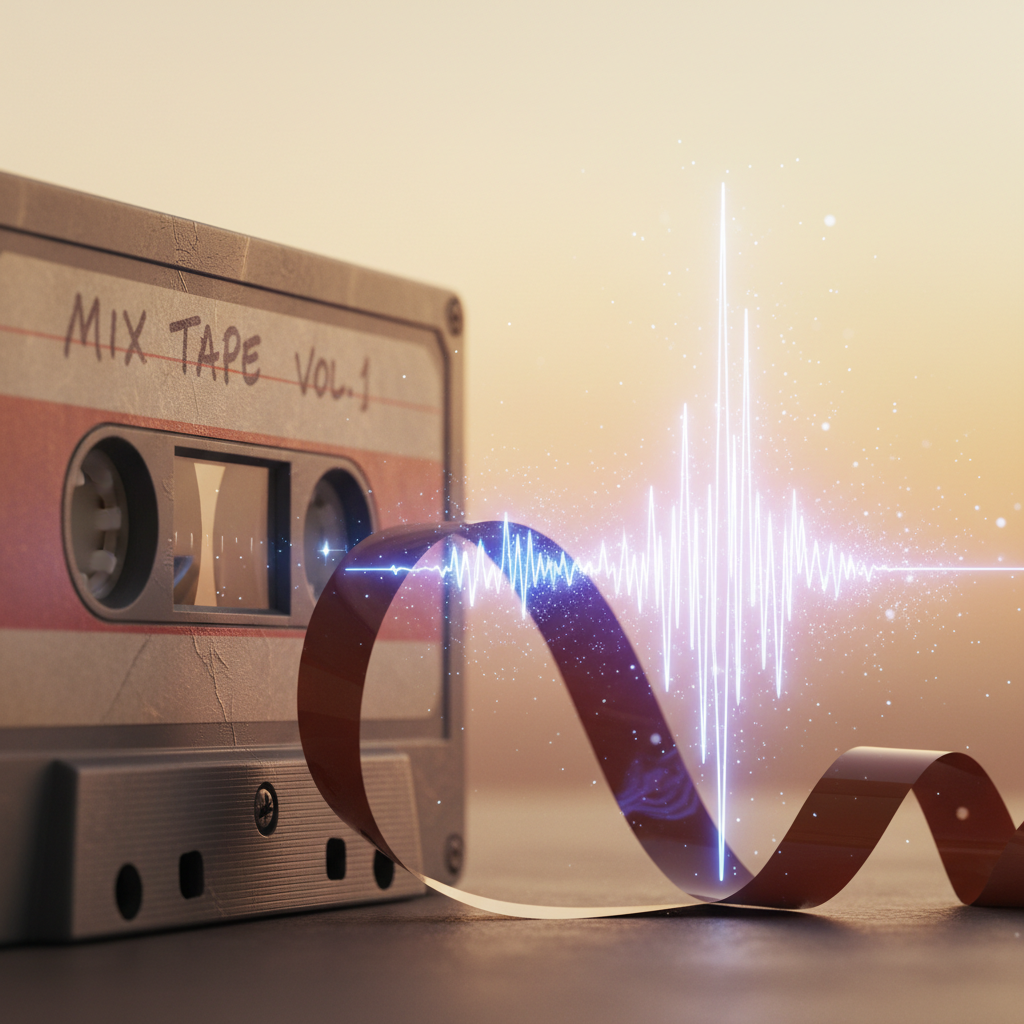
This opinion piece was drafted with AI assistance under the editorial direction of Rohan Mehta and reviewed before publication. Views expressed are the author's own.
My Ajoba, my mother’s father, had a voice that felt like home. It wasn’t a classically good voice; it was raspy from a lifetime of talking over the din of a large family and perhaps too many unfiltered cigarettes in his youth. But it was a voice that held the geography of my childhood. It was the sound of our ancestral village near Karwar, that sliver of coast where Karnataka meets Goa. He didn't just speak Konkani; he spoke *our* Konkani, a dialect shaped by the sea, the spice trade, and generations of stubborn isolation. It was a language with its own music, a rhythm that you won't find in the more standardized versions taught in schools or spoken in Mangalore or Mumbai.
Now, that voice is gone. Ajoba passed away six years ago. And with him, a significant piece of that dialect’s soul has begun to fade. My mother and her siblings speak it, of course, but it’s different. Their lives in Mumbai smoothed the rough, village-specific edges from their tongues. My generation, we understand it, we can string together a few sentences to please our elders, but we don't live in it. We think and dream in English and Hindi. The language of our Ajoba is becoming a relic, an heirloom we admire but don't know how to use.
This feeling of loss is not unique. It’s a quiet crisis unfolding in countless families across India and the world. With each generation that moves to a metropolis for a better life, a linguistic universe can collapse. The richness of a dialect, with its unique idioms and untranslatable words for specific kinds of rain or familial affection, gets flattened into the lingua franca of global commerce. We gain opportunities, but we lose a part of our identity, a sound that connects us to a specific place and a specific past.
For years, this loss was an abstract sadness, a topic of conversation over family dinners. All we had were memories and a handful of grainy home videos. Tapes from the 90s, capturing birthdays and poojas, with his voice buried under the crackle of the VHS and the chatter of twenty other relatives. It was a ghost in the machine, a faint echo I strained to hear.
Then my work at Pulse AI gave me a crazy idea. I spend my days writing about algorithms that can generate photorealistic images from a line of text, or code that can write itself. I'm surrounded by the relentless march of artificial intelligence into every corner of our lives. One night, while talking to a developer friend about the latest advancements in voice cloning, a thought sparked. What if we could take those fragmented, low-quality audio snippets of my Ajoba and teach an AI to speak in his voice? Could we, in a sense, digitally resurrect the sound of our dying dialect?
My cousin Sameer, an engineer with a love for impossible projects, was immediately on board. The mission was clear: we weren't trying to create a deepfake or a digital puppet. We wanted to build a voice model that could serve as a time capsule. We imagined feeding it text from Konkani folklore, stories he used to tell us, and hearing them read in his voice. It felt like a way to build a bridge back to him, to preserve not just the words but the specific, inimitable music he gave them.
The process was a lesson in frustration and hope. It began with me hunched over my laptop for weeks, watching hours of old family videos. I became an audio archeologist, digging for clean fragments of his speech. I found a two-second clip of him saying my name. A ten-second snippet of him telling a joke at a wedding. A short, breathless monologue complaining about the Mumbai humidity on a visit. Each clip was a treasure, a tiny shard of a broken mosaic.
We carefully clipped and cleaned these fragments, removing the background noise of autorickshaws, cawing crows, and my Aji, my grandmother, scolding someone off-camera. After weeks of work, we had just under five minutes of usable audio. By today's data-hungry standards, it was practically nothing. Most high-fidelity voice cloning models are trained on hours of pristine, studio-quality speech. We were feeding a gourmet algorithm a meal of scraps.
Sameer explained that the AI would likely struggle. It might capture the timbre, the basic texture of his voice, but the prosody—the rhythm, stress, and intonation of speech—would probably be wrong. It would sound like him, but an uncanny version, like a foreigner speaking his own language. I didn't care. An imperfect echo was better than silence.
We fed our precious audio data into the model and let it train. For two days, my laptop whirred as the algorithm worked, trying to learn the statistical patterns of my grandfather's voice from our meager dataset. It was a strange, liminal waiting period. I felt a bizarre mix of excitement and sacrilege. Was this a beautiful act of remembrance or a grotesque technological stunt? Was I honoring his memory or desecrating it?
Finally, Sameer called. "It's done," he said. I took a deep breath and drove to my parents' house. I wanted my mother to be the first to hear it. We sat together in the living room, the same room where Ajoba used to sit in his favorite armchair. I typed a simple sentence into the text-to-speech interface: "Kashi assai, aai?" How are you, mother?
I hit enter. The sound that came out of my laptop speakers filled the silent room. And it was him. The gravel was there. The slight lisp he had. The fundamental frequency, his unique vocal fingerprint, was unmistakable. It was my Ajoba’s voice.
And it was completely, utterly wrong.
The cadence was robotic, sterile. It spoke the words with the flat, even intonation of a GPS navigator. There was no warmth, no question mark in its voice. It was a perfect photograph of his voice, but with the life drained out of it. It was the sound of my grandfather, but with the soul of a machine. The uncanny valley wasn't just a valley; it was a chasm.
I looked at my mother. Her eyes were wide. A single tear rolled down her cheek, then another. She wasn't smiling. She was grieving. "That's his sound," she whispered. It was a statement of fact, not of joy. She reached out and touched the laptop, as if it were a relic. We sat there for a minute, listening as I typed in more phrases—his favorite idioms, the names of his grandchildren. Each one a beautiful, heartbreaking failure.
In that moment, I thought the experiment had failed. We had created a monster. A digital ghost that haunted us with what it was not. But as the days turned into weeks, something strange happened. The initial shock wore off, and the flawed result began to take on a new meaning.
My mother started asking me to play it. She would have me type in old sayings, or just her name. She knew it wasn't him. The AI's very imperfection was a constant reminder of that. The digital flatness of the voice highlighted, by its absence, the warmth and melody of the real man. It didn't replace the memory of him; it sharpened it. The flawed clone became a tool for remembering, a focal point for our aural memories. Hearing the AI's version, our brains would instinctively fill in the blanks, correcting the cadence, adding the warmth, remembering the twinkle in his eye that always accompanied a certain phrase.
It was a beautiful mess. It was an artifact of our love and our grief, rendered in code. It was a testament to the man and to the technology's limitations. We didn't resurrect his voice, but we created a new family heirloom, a new story to tell. It's the story of the time we tried to capture lightning in a bottle and ended up with a flickering candle—imperfect, but enough to light the dark.
This personal, clumsy experiment revealed a deeper truth about AI. We are obsessed with its potential for perfection, for flawless execution and superhuman capability. But maybe its real value, at this stage in its evolution, lies in its imperfections. The flawed AI voice became a mirror, reflecting our own humanity, our own loss, our own capacity to find meaning in the gaps between the ones and zeroes.
It didn't save my grandfather's dialect. One voice model can't reverse the powerful tides of migration and assimilation. But it created a powerful, personal archive of its sound. It stands as a monument, not to what was lost, but to the fact that we loved it enough to try and hold on. In the sterile, perfect world of algorithms, our beautiful, imperfect mess of a project felt profoundly, achingly human.
Why it matters
- 01AI's current imperfections can create emotionally resonant experiences, not just technical failures.
- 02Voice cloning technology offers a new, albeit flawed, tool for cultural and linguistic preservation.
- 03Personal AI projects can help us process complex emotions like grief and cultural loss in the digital age.