I Had AI Read My Rent Agreement. Here's What I Learned.
Intimidated by legal jargon? I uploaded my dense rental agreement to an AI to see if it could help. This is a practical guide to using AI for real-life clarity.
This opinion piece was drafted with AI assistance under the editorial direction of Rohan Mehta and reviewed before publication. Views expressed are the author's own.
There’s a unique mix of terror and excitement that comes with finding a new flat in a city like Mumbai. The excitement is about the future: the new view, the shorter commute, the neighbourhood coffee shop you’ll claim as your own. The terror is about the paperwork. Specifically, the rental agreement.
I remember the first one I ever signed. I was fresh out of college, moving into a tiny one-bedroom in Pune. The broker handed me a sheaf of papers that felt as thick as a novel, filled with words I’d never seen before: ‘heretofore’, ‘indemnify’, ‘force majeure’. I squinted at it, pretended to understand, and signed where I was told. I was committing to a year of my life and a significant chunk of my salary based on a document I couldn’t decipher. I suspect this experience is nearly universal.
Fast forward a decade. I’m an editor at an AI publication, and I live and breathe this technology. As the renewal for my Bandra flat approached, my landlord sent over the updated agreement. The familiar dread returned. It was the same dense, intimidating legalese. But this time, I had a new tool at my disposal. I decided to run an experiment: could I use the power of a large language model to finally understand what I was signing?
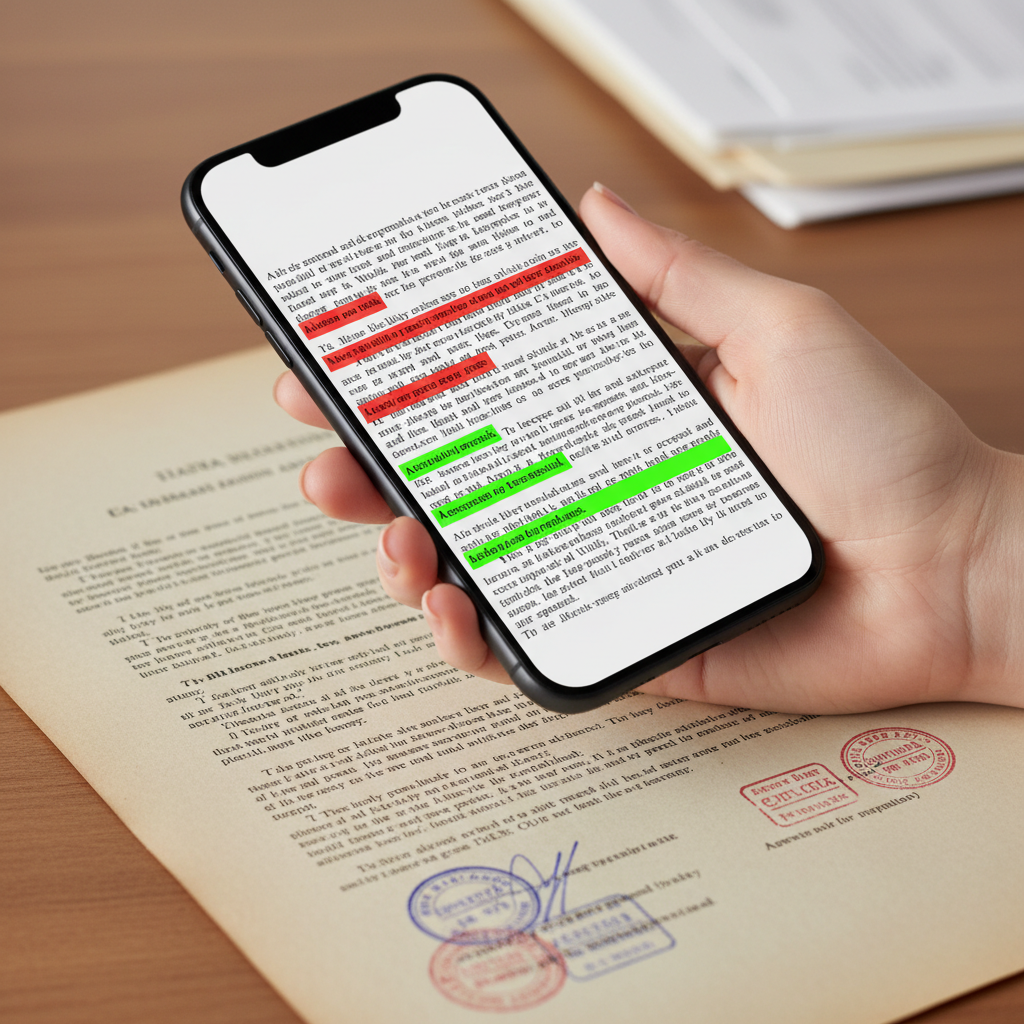
I opened up one of the popular AI chat interfaces, the kind that now allows you to upload documents. I scanned the 15-page rental agreement into a single PDF file. With a simple drag-and-drop, the document was uploaded. The simplicity of the action felt almost comical when contrasted with the complexity of the legal maze I was trying to navigate. My digital life, my professional work—it’s all about simplifying complexity. It was time to apply that to my personal life.
My first prompt was basic. I was looking for the highlights, the executive summary that no landlord ever provides. I typed: “Summarize this rental agreement in simple English. What are my most important duties as the tenant, and what are the landlord’s main responsibilities?”
Within about thirty seconds, the AI responded. It wasn’t a wall of text. It was a clean, clear breakdown. It told me I had to pay my rent by the 7th of each month, that I was responsible for paying the utility bills directly, and that I couldn't make any structural changes to the apartment without written consent. It confirmed the landlord was responsible for major repairs to the building’s infrastructure and for paying the property taxes. It was everything I already knew, but seeing it stripped of all the jargon was instantly calming. It felt like I finally had a map of the territory.
Next, I decided to dig into the clauses that have always felt like traps. In India, the ‘lock-in period’ is a standard feature of many agreements, but its implications can be brutal. So, my next prompt was more specific: “Explain the ‘lock-in period’ clause in section 5. What are the exact financial consequences for me if I need to leave the apartment early because of a family emergency or a job transfer?”
This is where the AI started to feel like a superpower. It explained that the lock-in of 12 months meant I was contractually obligated to pay the rent for the entire duration, even if I vacated the premises. It calculated the exact amount I would forfeit if I left at the six-month mark. But it also added a crucial piece of advice. It said, “The clause does not mention any exceptions for unforeseen circumstances. You could consider proposing an amendment, such as a diplomatic clause, which allows for termination of the lease with a one-month notice if you are transferred by your employer to another city.” This wasn’t just translation; this was strategy.
Feeling emboldened, I moved on to the security deposit. The black hole of renting. My prompt: “Analyze the clauses related to the security deposit. What are the conditions for its deduction and return? Is there any ambiguity I should be aware of?”
Again, the AI was sharp. It highlighted that the agreement stated the deposit would be returned ‘after deducting costs for any damages’, but critically, it did not specify a timeframe for the return. The AI pointed out that in many local jurisdictions, there are rules governing this, and it’s common for agreements to state the deposit will be returned within 30 or 45 days of the tenant vacating. “The current wording,” the AI noted, “gives the landlord significant discretion over when the deposit is returned. It would be beneficial to request a specific timeframe, for example, ‘within 30 days of handing over possession’.” Suddenly, I had a concrete, reasonable request to make.
This was the turning point. I wasn’t just a passive recipient of a contract anymore. I was an active participant. The final test was to let the AI loose and ask it to be my advocate. My most ambitious prompt yet: “Read this entire agreement from the perspective of a tenant’s lawyer. Flag any clauses that are one-sided, unfair, or not standard for the Mumbai rental market. Explain why they are problematic and suggest a fairer alternative.”
The response was a revelation. It flagged three things that I had read a dozen times but never truly registered.
First, it pointed to a clause about landlord access. The agreement gave the landlord the right to enter the apartment for inspection with just four hours of notice. The AI explained that while landlords have a right to inspect their property, standard practice and a respect for the tenant’s privacy usually dictate a minimum of 24 hours’ notice, except in absolute emergencies like a fire or major flood. It suggested I ask for the notice period to be changed to 24 hours.
Second, it highlighted a blanket indemnity clause. In essence, the way it was written, I would be responsible for any and all damages, even those caused by faulty wiring or a leaking pipe that was the landlord’s responsibility. The AI called this ‘overly broad’ and suggested wording that clarified my liability was limited to damages caused by my negligence or that of my guests, not from pre-existing structural issues.
Finally, it flagged the absence of a clause about the society’s No-Objection Certificate (NOC) renewal. In many Indian housing societies, an annual NOC is required for tenants. The AI noted that the agreement didn't specify whose responsibility it was—the tenant or the landlord—to handle the paperwork and any associated fees. This small omission could lead to major headaches down the line. It recommended adding a line clarifying that the landlord would be responsible for securing all necessary society permissions for the duration of the lease.
Of course, I know an AI is not a lawyer. It doesn't have a license to practice law, and its advice comes with a mountain of disclaimers. It can't understand the nuances of a human relationship or the specific context of my negotiation with my landlord. Its knowledge of hyper-local laws might be incomplete. But that was never the point.
The point was to transform me from an uninformed, intimidated person into a prepared, confident one. Instead of going to a lawyer and saying, “Can you read this?”, I could now go and ask, “My lease has a 4-hour notice period for entry; can we push for 24 hours? And what’s the standard practice for security deposit returns under the Maharashtra Rent Control Act?” I'm no longer asking for a translation; I'm asking for strategic advice on specific points. It’s a more efficient and less costly way to use a legal professional’s time.
This experience extends far beyond a simple rental agreement. It applies to employment contracts, health insurance policies, car loan documents, and the endless terms and conditions we click ‘Agree’ on every day. We are constantly navigating a world built on complex legal and financial text that is designed to be opaque. AI is proving to be the lantern we can use to find our way through.
In the end, I emailed my landlord. I politely brought up the points the AI had helped me formulate: the notice period, the security deposit timeline, and the responsibility for society permissions. He was surprisingly receptive. We agreed on 24 hours’ notice and a 30-day window for the deposit return. It was a small victory, but it felt monumental. For the first time, I wasn't just signing a lease. I was helping to write it. And that feeling of empowerment is something no amount of jargon can take away.
Why it matters
- 01AI can instantly summarize complex legal documents like rental agreements into plain English, outlining your core responsibilities.
- 02You can ask AI to analyze specific clauses for fairness and flag terms that are unusual or potentially exploitative.
- 03While not a replacement for a lawyer, legal AI tools empower you to ask better questions and negotiate contracts more effectively.