I Scored My Daily Commute with AI: A Guide to Suno Music
I'm no musician, but I used Suno AI to create a soundtrack for my life, from my chaotic Mumbai train commute to my quiet desk. Here's how you can too.
This opinion piece was drafted with AI assistance under the editorial direction of Rohan Mehta and reviewed before publication. Views expressed are the author's own.
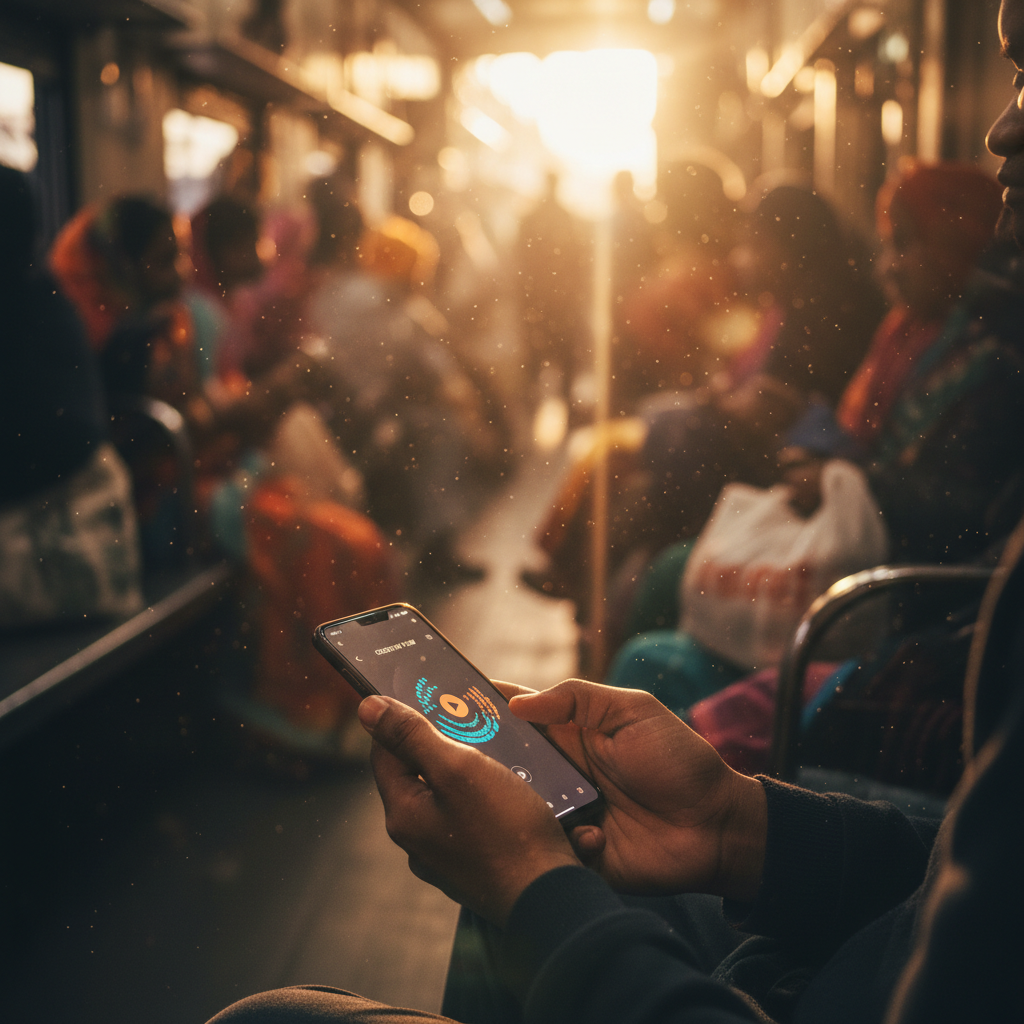
There’s a specific rhythm to the 8:47 AM Virar fast from Borivali station. It’s not a gentle one. It’s a percussive, chaotic symphony of hurried footsteps, the metallic screech of the train on the tracks, the overlapping shouts of vendors, and the low, constant hum of a million conversations happening at once. For years, this has been the soundtrack to my morning. A soundtrack I didn't choose, but one I endured. I am not a musician. I can’t read a single note of music. My attempts at singing are politely ignored by my family, and the last instrument I touched was a dusty recorder in the fourth grade.
Yet, I’ve always felt that my life, these moments, deserved a better score. A soundtrack that captured not just the chaos, but the feeling underneath it all—the ambition, the exhaustion, the weird, unspoken camaraderie of being pressed against a thousand fellow Mumbaikars, all hurtling towards their own version of a dream. So, when I first heard about AI music generators, my first thought wasn't about the future of the music industry. It was much more personal: could I finally write a song for the 8:47 AM Virar fast?
As an editor at Pulse AI, I am constantly swimming in the latest developments of this technology. Most of it is abstract, geared towards enterprises or complex data problems. But tools like Suno AI feel different. They feel personal. The premise is seductively simple: you describe the music you want to hear, and the AI creates it. A full song, with vocals, instruments, and a coherent structure, conjured from a paragraph of text. It sounded like magic, and I was deeply skeptical. But the idea was too compelling to ignore.
I decided to dive in, using my daily routine as the canvas. My first prompt was a love letter to my commute. I typed it out, feeling slightly ridiculous: “A high-energy, hopeful Bollywood-style song about the morning chaos of a Mumbai local train. Featuring the sounds of the station, a fast dholak beat, soaring vocals about chasing dreams in the big city.” I hit ‘Create’ and waited, expecting a garbled, nonsensical mess.
What came back a couple of minutes later was… astonishing. It wasn’t a masterpiece that would top the charts, but it was undeniably a song. The beat was infectious, the melody had that distinctly cinematic, upbeat Bollywood feel I’d asked for, and the AI-generated male voice sang lyrics about “steel rivers” and “a city’s heartbeat.” It even incorporated a faint, ambient sound of a train whistle in the mix. I was floored. It wasn’t perfect—one of the lines was a bit clunky—but it captured the emotion. It was the song that had been playing in my head for years, finally made real.
The next morning, I stood on the crowded platform, earphones in, and played my creation as the 8:47 AM pulled in. The experience was transformative. The mad rush to get a spot wasn’t an annoyance; it was the opening scene of a movie. The blur of faces wasn't a crowd; it was a cast of extras. The AI hadn't just generated a song; it had reframed my entire reality. The daily grind had become an anthem. This wasn't just technology; it was a tool for personal myth-making.
Emboldened, I decided to score the other end of my day: the quiet solitude of my desk. The contrast was stark. The enemy here isn't chaos; it's the deafening silence that can sometimes invite distraction. My usual solution is a generic ‘Lo-fi Beats for Studying’ playlist, but it always feels impersonal. I wanted a track that was *mine*. My prompt reflected this: “An instrumental, minimalist lo-fi track for deep focus. Slow, gentle electric piano, a soft, steady drum machine beat, and a warm synth pad that feels like a blanket. No vocals. Calm, productive, and slightly melancholic.”
Again, Suno delivered. It generated a two-minute piece of music that was exactly what I had described. The melody was simple but not boring, the beat was unobtrusive, and the overall mood was perfect for sinking into a state of flow. It was a tailor-made productivity tool. Unlike a public playlist, this felt like my own personal space, sonically cordoned off from the rest of the world. I found myself generating a few variations, creating my own custom ‘Deep Work’ album built around my specific tastes.
This is where I discovered the real joy of a tool like Suno. It’s not just about creating a perfect song. It’s about experimentation and play. I started getting weirdly specific. I wrote a prompt for a “1960s surf rock jingle about the existential dread of seeing my laptop battery at 5%.” The result was a surprisingly catchy, upbeat tune with jangly guitars and lyrics about “power cord blues.” I created a dramatic, orchestral film score for the moment I make my afternoon chai, complete with a crescendo as the water boils. I made a folksy, acoustic ballad about a pigeon that sits on my window sill every day.
Most of these were silly, private jokes between me and the AI. But they were also acts of creative expression. I was turning the tiny, mundane details of my life into art, however small. I didn't need to know how to compose a chord progression for a surf rock track or orchestrate a string section. I just needed to have the feeling and the words to describe it. The AI was my infinitely patient, multi-talented session musician.
Of course, this raises the inevitable questions. Is this the end of human musicians? Does this devalue the craft of songwriting? From where I stand, the answer is a clear no. What I was doing wasn’t a threat to the incredible artistry of a human composer. A tool like Suno, at least for now, doesn't possess the lived experience, the soul, or the nuanced storytelling of a great artist. It can’t write a ‘Bohemian Rhapsody’ because it has never felt real pain or questioned its own reality.
Instead, I see this as a radical democratization of creation. For centuries, making music was a walled garden, accessible only to those with innate talent or the privilege of formal training. Tools like Suno are for the rest of us. It’s like when the camera was invented. It didn't eliminate painters; it created a new art form and a new type of artist—the photographer. Similarly, AI music generation won't replace musicians; it will create a new category of creator—the sonic curator, the personal soundtrack artist.
It allows us to add a new layer of personalization to our lives. We curate our clothes, our social media feeds, the art on our walls. Why not our soundscapes? Why should the score to our lives be limited to what a handful of artists and algorithms on Spotify decide we should hear? For the first time, the soundtrack can be as unique as the life being lived.
For anyone looking to try this, the process is simpler than you think. The key is in the prompt. Be descriptive. Don't just say 'happy song.' Say 'an upbeat, indie pop song with acoustic guitar and a female vocalist, about the feeling of the first warm day of spring.' Specify the genre, the mood, the instruments, and the theme. The more detail you give the AI, the closer it will get to the sound in your head. You can even write your own lyrics and ask Suno to set them to music.
This journey, for me, was never about becoming a musician. It remains a skill I deeply admire but do not possess. This was about finding a new way to interact with my own world, to find the music hidden in the noise. The 8:47 AM Virar fast still has its chaotic rhythm, but now, I have a choice. I can listen to the raw, unedited track of the city, or I can put on my headphones and play my own anthem—a song born from the chaos, but composed by me and my digital partner, turning a daily commute into something that feels, even for just a few minutes, like a movie.
Why it matters
- 01AI music tools like Suno empower non-musicians to create personal soundtracks for their daily lives.
- 02The key to getting good results from AI music generators is writing descriptive, detailed prompts specifying mood, genre, and instrumentation.
- 03This technology is less a replacement for human artists and more a democratization of creative expression, similar to how cameras made photography accessible.