I Use AI to Secretly Fact-Check My Mother's Health Advice
My Indian mother's WhatsApp is a fountain of dubious health advice. I use AI to quietly verify it, navigating a silent, generational tech divide in wellness.
This opinion piece was drafted with AI assistance under the editorial direction of Rohan Mehta and reviewed before publication. Views expressed are the author's own.
The message arrived on a Tuesday morning, nestled between a good morning sunflower GIF and a video of a baby laughing. It was from my mother. The text, a breathless block forwarded from an unknown source, warned that drinking cold water after a meal could cause cancer. It explained, with the confidence of a surgeon general’s warning, that the cold liquid solidifies the oily foods we’ve just eaten, which then lines the intestine, eventually turning into malignant tumors.
My first reaction was a familiar, gentle sigh. This is a near-daily ritual for me, and for millions of other sons and daughters in India and across the diaspora. My mother, a woman of deep intelligence and even deeper love, is a firehose of health information, most of it originating from the murky, anonymous depths of WhatsApp University. One day, it’s a miracle cure involving boiled lemon and ginger. The next, a dire warning about microwaves ‘nuking’ the nutrients out of food. It is her primary love language, a constant stream of concern for my well-being, expressed in pixelated JPEGs and all-caps text.
In the past, I would have had two options. The first was to ignore it, letting the advice evaporate into the digital ether. This felt dismissive of her intent, like leaving a heartfelt letter unread. The second was to reply with a link from a reputable source, like the Mayo Clinic or the World Health Organization, gently debunking the claim. This often led to a tense exchange, a feeling that I was disrespecting her or the collective wisdom of her social circle. It was seen not as a correction, but as a rejection.
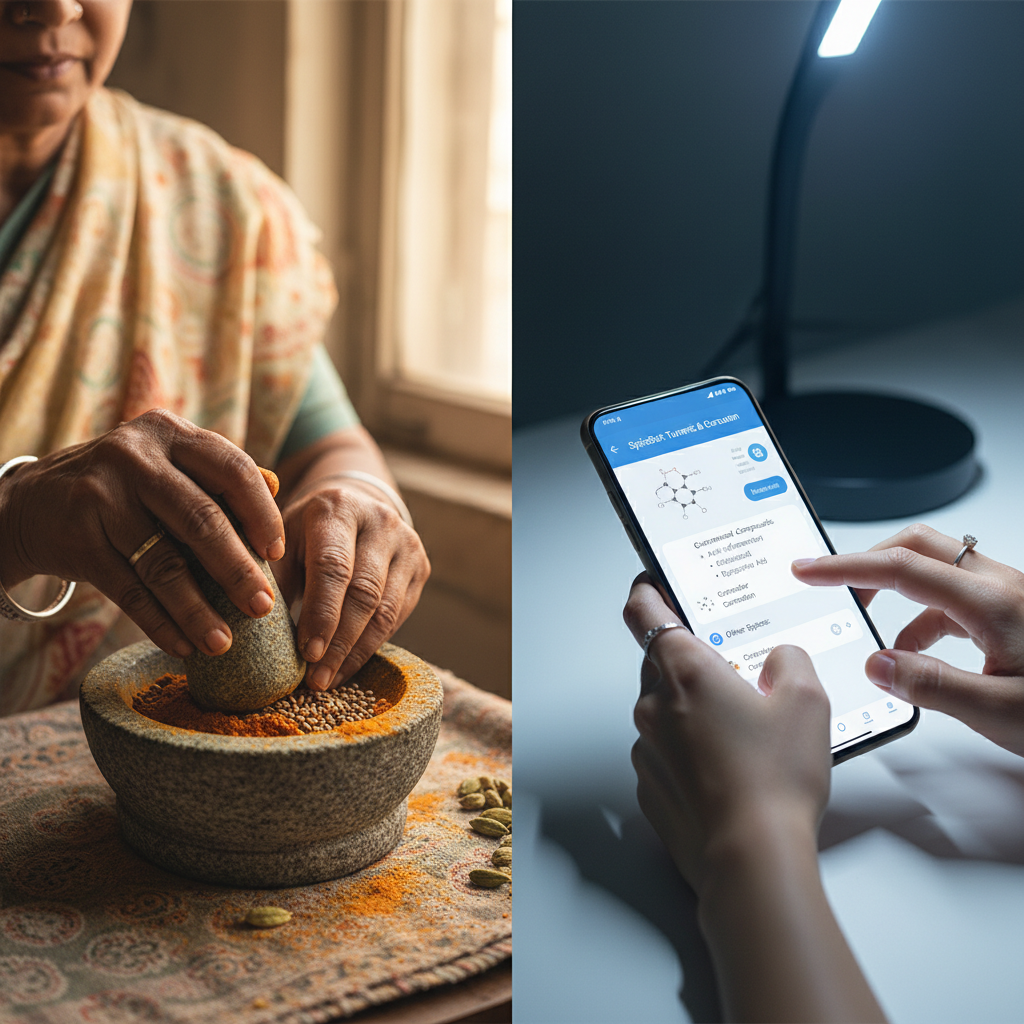
But for the past year, I’ve developed a third option. A secret one. I copy the core claim from her message — ‘cold water after meal causes cancer’ — and paste it into a different chat window. This one isn’t with a friend or a colleague. It’s with an AI. Specifically, a large language model trained on a vast corpus of scientific and medical literature. I ask it a simple question: “Can you assess the scientific validity of this claim and provide a summary of the current medical consensus, citing sources?”
Within seconds, it comes back with a calm, measured response. It explains the digestive process, how stomach acids work at a consistent temperature regardless of the water consumed, and how the claim has no basis in scientific evidence. It pulls from gastroenterology journals and public health advisories. It is polite, thorough, and dispassionate. Armed with this quiet confirmation, I can now reply to my mother. I don’t send her a wall of text or a link. I simply type back, “Thanks for looking out for me, Ma. I’ll keep it in mind.”
I’ve become a silent, one-man fact-checking agency for my own family. And in doing so, I’ve opened a new, invisible front in the generational divide. She and I are now operating in two completely different information ecosystems. Hers is based on trust, social proof, and the authority of the 'forwarded as received' message. It’s a world of digital folklore, where a compelling narrative or a frightening warning is its own validation. My world, increasingly, is one of AI-assisted verification. It’s a space where I can privately stress-test reality without creating interpersonal conflict.
This isn't just about debunking old wives' tales. The claims are becoming more specific and more alarming. A few months ago, it was a detailed protocol for using fenugreek seeds to reverse type 2 diabetes. The message was so convincingly written, complete with a daily schedule and dietary restrictions, that I could see how someone desperate for a solution might try it. My AI assistant, however, quickly analyzed it, noting that while fenugreek may have a modest effect on blood sugar regulation, abandoning prescribed medication in favor of this unproven regimen is incredibly dangerous. It even pointed me to studies that had investigated this very topic.
My quiet use of this technology has created an ethical tightrope that I walk every day. On one hand, I feel like I'm being a responsible son. I’m protecting my parents from potentially harmful misinformation, from wasting money on sham cures or, worse, abandoning effective medical treatments. I am, in a way, curating their reality to make it safer. It feels like a modern form of caregiving, an act of digital protection.
On the other hand, there’s a nagging feeling of deception. I’m not being honest about how I process her advice. I’m withholding my methodology. If I were to tell her, “Ma, before I trust what you send me, I have a robot read through millions of medical papers to see if you’re right,” it would shatter the foundation of our communication. It would be an insult, a declaration that her intuition and her network of friends are untrustworthy. It would be a betrayal.
This trust gap isn’t unique to my family. It’s a chasm that separates entire generations. My parents' generation placed their faith in established authorities: the doctor, the respected elder, the printed newspaper. In the digital age, those authorities have fractured. The internet, and platforms like WhatsApp, created a vacuum that has been filled by a cacophony of new, unvetted voices. For many of our parents, a message forwarded by a trusted friend carries the same, if not more, weight than a peer-reviewed study they’ve never heard of. For digital natives like me, the instinct is the opposite: to be skeptical of anything without a clear, verifiable source.
I work in the AI industry. I see how these tools are built. I understand their limitations, their potential for bias, and their fallibility. I don’t treat the AI’s output as gospel. I treat it as an incredibly powerful research assistant, one that can synthesize vast amounts of information in seconds. It’s a starting point for my own critical thinking, not an endpoint. Yet, to my mother, the very concept feels alien and cold. For her, health and wellness are matters of the heart, of tradition, and of community wisdom. The idea of outsourcing that to a machine feels like a profound category error.
The global context makes this even more complex. In India, we have a rich history of traditional medicine, like Ayurveda, which is often the subject of the messages my mom forwards. These systems are not always easily verifiable through the lens of Western clinical trials, creating a clash of epistemologies. The forwarded messages often blend traditional knowledge with modern pseudoscience, creating a hybrid form of misinformation that is particularly potent. An AI trained predominantly on Western medical literature might summarily dismiss a traditional remedy that has cultural significance and, in some cases, unstudied therapeutic benefits. Navigating this requires a cultural and technological nuance that we are only just beginning to develop.
I wonder about the future of this silent mediation. Will it become a standard feature of our lives? Will our phones one day have a built-in 'family misinformation filter' that quietly flags dubious claims in our chat threads? Perhaps an AI will even draft the gentle, non-confrontational replies for us. “Thank you for your concern about 5G radiation. I will be sure to wear my tinfoil hat. Love you!” The thought is both comforting and deeply unsettling.
This afternoon, another message came through. It was a video claiming that a specific sequence of acupressure points on the hand could instantly relieve a heart attack. It was dramatic and urgent. I sighed, copied the claim, and turned to my silent partner. The AI analyzed it, explained the absolute necessity of calling emergency services, the dangers of delaying professional medical care, and how acupressure is not a recognized treatment for an acute myocardial infarction.
After reading its response, I didn't feel smug or technologically superior. I just felt a quiet sense of relief. I picked up my phone and video-called my mother. She answered, her face breaking into a wide smile. We didn't talk about heart attacks or cold water or cancer. We talked about her day, about the vegetables she bought at the market, about a cousin’s upcoming wedding. In that moment, there was no technology, no information gap, no silent divide. There was just a son, talking to his mom. And I was using the most sophisticated technology of the 21st century to make sure we could keep having those simple conversations for a long, long time.
Why it matters
- 01Using AI to fact-check family health advice can be a way to manage misinformation without causing interpersonal conflict.
- 02A generational divide exists in how we verify information, with digital natives relying on data and older generations on social trust.
- 03This silent mediation raises ethical questions about deception, responsibility, and the future of technology in family relationships.