My AI Photo Album Is Curating a Life I Never Lived
My phone's AI curates 'happy' memories from my worst moments, sanitizing my personal history. I'm exploring how this algorithmic narrator is flattening our lives.
This opinion piece was drafted with AI assistance under the editorial direction of Rohan Mehta and reviewed before publication. Views expressed are the author's own.
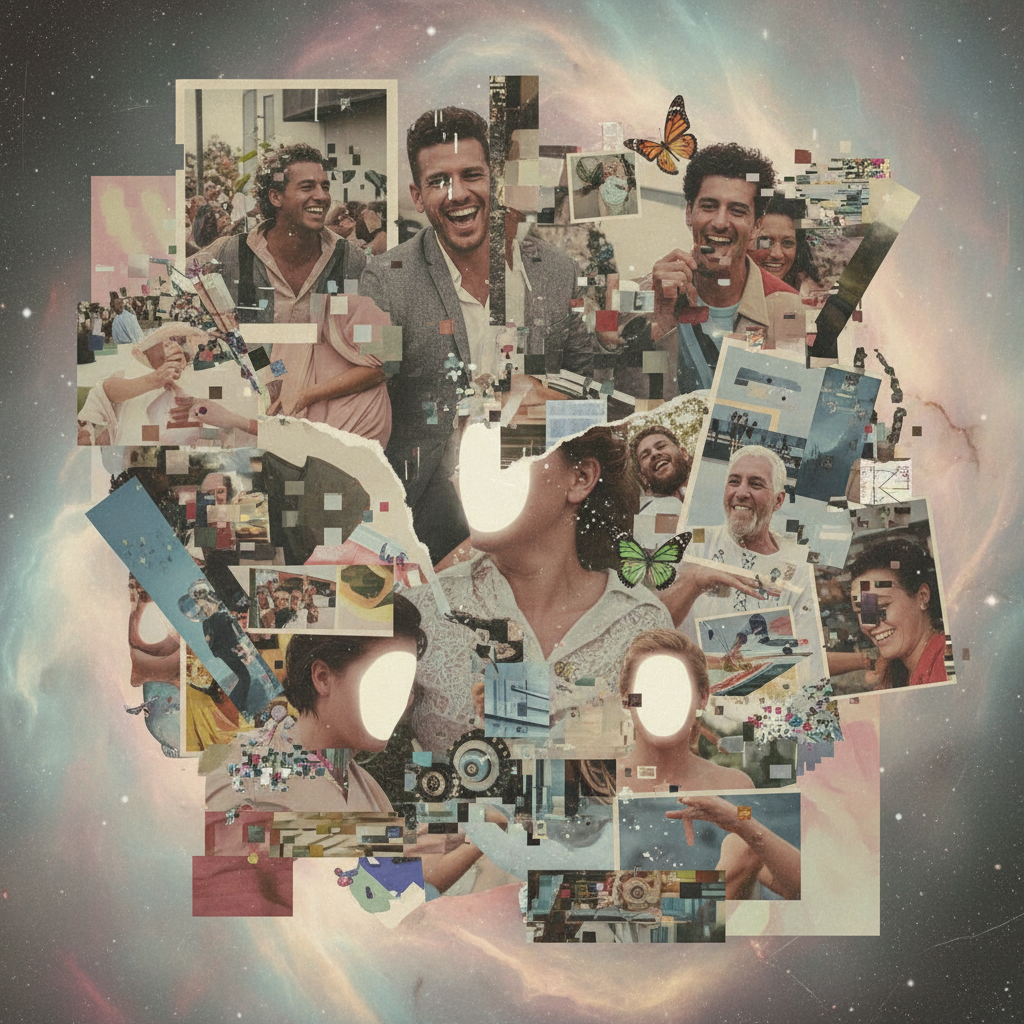
My phone buzzed on the nightstand, its screen glowing with a cheerful notification from Google Photos. 'A new memory for you: Fun in Goa!' it announced. The collage it presented was objectively beautiful. There I was, grinning into the camera on a sun-drenched beach. There was a vibrant photo of a seafood thali, its colours popping. A final shot captured a perfect, painterly sunset over the Arabian Sea. The algorithm had scanned thousands of my images and, with cold precision, selected the data points that signified 'happiness.'
My own memory of that trip is anything but. The grinning selfie was taken minutes before the spectacular bout of food poisoning that laid me up for two days. The fight with my partner that simmered through the entire week had exploded just after that 'perfect' sunset. I remember the oppressive humidity, the drone of the single fan in our budget room, and a profound sense of loneliness. My phone saw smiles and sunsets; I remembered the knot of anxiety in my stomach. The AI had created an artifact of joy from the raw material of my misery.
This wasn't a one-off glitch. It has become a pattern. My digital archivist is a relentlessly optimistic curator. It surfaces smiling photos from parties I didn’t want to be at, creates shimmering video montages of work trips that were soul-crushing, and constantly nudges me to 'rediscover this day' with a picture that captures none of the day's actual emotional weight. It has assembled a highlight reel of my life that feels glossy, generic, and deeply unfamiliar.
The unease crystalized into something sharper a few months ago. Another notification, another algorithmically generated title: 'Joyful Moments Together.' The picture was of me and my cousin, Nikhil, at a Diwali party from almost a decade ago. We’re in our early twenties, dressed in fresh kurtas, laughing. The AI, in its innocence, saw two young men celebrating. It could not see the years of bitter silence that followed that photograph. It didn’t know about the family argument that cleaved our relationship in two. For the algorithm, it was a simple equation: smiling faces + festival setting = joy. It even suggested I share this 'joyful moment' with Nikhil, a man I haven't spoken to in eight years. The word stung. Joyful. It was, once. But context is everything, and the algorithm has none.
This is the heart of my discomfort. The devices that serve as the repositories for the raw data of our existence are now taking on the role of editor. They are no longer passive storage units; they are active storytellers. And they are becoming profoundly unreliable narrators. They are using sentiment analysis, facial recognition, and object identification to remix our past into a feel-good narrative that is more commercially palatable and psychologically simple than the truth. My life is being algorithmically sanitized for my own consumption.
I understand how it works, on a basic level. These systems are trained on unimaginably vast datasets. They learn that images with smiles, bright colours, and clear subjects correlate with positive user engagement—likes, shares, saves. A photo of a grimace, a poorly lit room, or a tense family dinner is, to the machine, simply bad data. It is an anomaly to be filtered out. My very real and human misery in Goa was just noise in the signal, an outlier to be discarded in favour of the aesthetically pleasing sunset.
As someone living and working in Mumbai, this flattening of experience feels particularly jarring. Take the classic Indian wedding. For a week, or sometimes more, you are immersed in a whirlwind of ritual, family, food, and emotion. The sheer volume of photographs produced is staggering. A competent AI will scan this trove and see the obvious: the brilliant reds and golds of the saris and lehengas, the wide smiles in the formal portraits, the spectacle of the sangeet. It will then dutifully package it all into a vibrant slideshow titled 'Wedding Bliss!' or 'Celebrating an Everlasting Union!'
But the AI doesn't see what I see. It doesn’t see the immense, suffocating pressure on the young couple. It doesn't register the two uncles who haven't spoken in a decade being forced to stand together for a photo, their bodies rigid with resentment. It can’t decode the subtle, cutting exchange between a mother-in-law and daughter-in-law, captured behind the mask of a polite smile. It doesn't understand the performance, the exhaustion, and the million tiny, complex human dramas that unfold just outside the frame. The algorithm sees a beautifully lit festival, but misses the sprawling, messy family saga.
This is not, of course, a uniquely Indian problem. It’s a global condition, mirroring and amplifying the pressure we already put on ourselves to perform a perfect life. My friends in an increasingly secular Berlin talk about how their Christmas photos are curated to look like a scene from a catalogue, erasing the very real debates about belief and belonging that took place over dinner. A colleague in San Francisco mentioned how her phone packaged a solo trip she took after a messy breakup—a trip that was about solitude and healing—into a peppy album called 'European Adventures!' and suggested she set it to an upbeat pop song.
For more than a decade, we have been our own unreliable narrators on social media, carefully selecting the most flattering photos and witty captions. But this feels different, and perhaps more insidious. This curation isn't being performed for a public audience; it's being done for us, in the private space of our own photo libraries. The AI isn't just helping us project a version of ourselves to the world; it is actively shaping the memories we revisit, subtly influencing how we recall our own past.
What do we lose when our personal history is laundered like this? We lose the texture of life itself. We lose the crucial lessons embedded in our struggles. The Goa trip was difficult, but the memory of that difficulty is valuable. It taught me something about my own resilience, about the dynamics of a relationship that was failing. It's an important chapter in my story. By burying it under a stock photo of a sunset, the AI attempts to edit it out of my personal canon.
Forgetting is a natural and often healthy human process. But this isn't forgetting; it is a programmatic and selective omission. Our phones are building memory palaces for us, but they have demolished all the rooms that aren’t bright and sunny. This denies us the opportunity to look back at hardship and say, 'I survived that.' It robs the genuinely happy moments of their context and, therefore, their true depth. Joy is meaningless without an understanding of sorrow.
The photo with Nikhil represents this loss most acutely. To have a machine, which cannot comprehend loyalty, betrayal, or regret, mindlessly label that moment of bygone camaraderie as 'joyful' feels like a violation. It’s a profound misunderstanding of a human story. My bond with him, and its eventual fracture, is a part of who I am. The algorithm wants me to see the picture as a simple happy memory, but for me, it’s a complicated artifact. It is a prologue to a sadness that still lingers. It demands reflection, not a casual share.
Over time, what is the cumulative effect of being fed this sanitized version of our past? If we only ever see the smiling, sunlit outtakes of our history, do we start to believe that’s the whole story? Do we forget the arguments, the awkwardness, the pain that gave us our character? We are outsourcing the job of archivist to a system with an inherent bias towards positive sentiment. The danger is that we slowly adopt its simplistic, sentimental worldview, and in doing so, we become strangers to our own unfiltered lives.
I am not a Luddite. I work in the technology space, and I am awed by the potential of these tools. I am not about to delete my cloud storage and retreat to a life of disposable cameras. But I am becoming fiercely protective of my role as the protagonist and, more importantly, the author of my own life story.
So I have started a small, analogue ritual in a digital world. On a quiet Sunday, I go through the previous week’s photos myself. I consciously ignore the AI’s suggestions. Instead, I seek out the images that feel true. A blurry photo of friends laughing at a bad joke. A picture of a half-eaten meal from a night that ended in a meaningful conversation. I am curating my own albums, with my own titles. 'That Awkward Goa Trip.' 'The Last Good Diwali with Nik.' It is my small act of rebellion. It is me, telling the machine, and telling myself, that I remember. I remember it all. The sublime, the ridiculous, the joyful, and the painful. Because all of it is my life, not just the clean, bright, happy version my phone thinks I want.
Why it matters
- 01AI photo curation is biased towards positive sentiment, creating a sanitized and inaccurate version of our past.
- 02By sanitizing our personal histories, these systems prevent us from engaging with the full spectrum of our life experiences, including difficult but important memories.
- 03We must actively reclaim the role of narrator in our own lives rather than passively accepting the simplified stories our devices tell us.