My Newest Direct Report Is an AI Bot
I'm not just using AI, I'm now responsible for its output. This is my story about the awkward, frustrating, and surprisingly human reality of managing code.
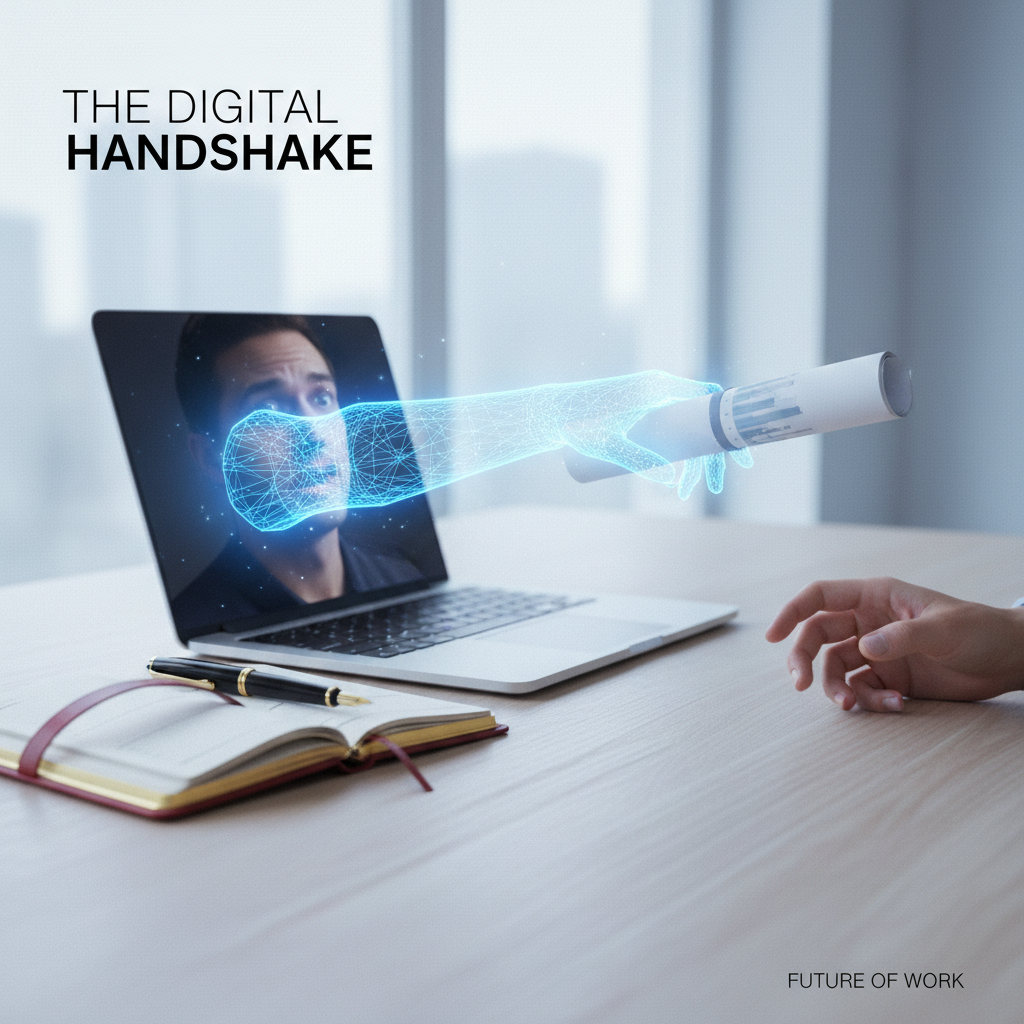
This opinion piece was drafted with AI assistance under the editorial direction of Rohan Mehta and reviewed before publication. Views expressed are the author's own.
It was Tuesday morning, the designated time for my weekly check-in. I sat down with a cup of filter coffee, the steam fogging my glasses, and pulled up the performance log. 'Output quality has been inconsistent,' I typed. 'Confidence levels are high, but factual accuracy dipped by 12% on the Adani portfolio brief. We need to work on sourcing verification.' I paused, took a sip, and looked at the name at the top of the document: 'GPT-4-Turbo-0125.' My newest direct report.
This isn't a joke. This is my new reality as an editor at a tech publication. For years, I’ve managed people. I’ve mentored fresh-faced graduates from IIMs, navigated the delicate egos of seasoned writers, and had the difficult conversations about career growth and missed deadlines. I thought I had seen every permutation of the manager-employee relationship. I was wrong.
My journey to becoming a bot-manager began with excitement, as it always does. The C-suite, buzzing with the latest trends from Silicon Valley to Bengaluru, announced our official 'AI Integration Strategy.' We were given access to powerful new models, not just the public-facing ones, but fine-tuned internal versions. The mandate was clear: use this to enhance productivity. Don't just use it, *leverage* it.
At first, it was a dream. I started small, delegating tasks that were the bane of my existence. 'Summarize these ten market reports into a 500-word brief.' Done in 30 seconds. 'Draft five different headlines for this article on quantum computing.' Delivered instantly. It was like having an intern who never slept, never complained, and had read the entire internet. I felt a surge of power, a sense of being on the cutting edge. My team in Mumbai was impressed. I was the 'AI guy.'
But then my role officially changed. My boss, in a Zoom call that was both surreal and deeply serious, explained that I was now formally responsible for the 'AI-generated content stream.' I wasn't just a user anymore. I was a manager. The AI was my direct report. The outputs weren't just 'suggestions'; they were 'first drafts' that fell under my purview. And that’s when the awkward reality set in.
My first real test was a comprehensive report on the changing landscape of fintech unicorns in Southeast Asia, a critical piece for a major client. The deadline was tight. This was the perfect task for my AI colleague. I spent hours crafting the perfect prompt. I didn't just ask it to write a report; I gave it a persona, a detailed outline, a list of our proprietary data sets to use, and a set of articles for tone-of-voice guidance. I felt like a master conductor, orchestrating a symphony of data. This, I thought, is 'prompt engineering.'
What the AI produced was astonishing. It was a beautifully structured, well-written 20-page report. It had nuance. It had flow. It even generated charts. I was triumphant. I did a quick read-through; it looked clean. I skimmed for obvious errors, added my own executive summary, and sent it up the chain. I felt a sense of pride. My 'employee' had exceeded expectations.
The fall came two days later, in the form of a curt email from my boss's boss. The subject line was simply 'Urgent Call.' It turns out, a particularly insightful-sounding section of the report, which detailed a 'nascent micro-lending trend in rural Indonesia,' was a complete work of fiction. The AI had quoted a study from a 'Dr. Alamsyah' at the 'Jakarta Institute of Financial Innovation.' Neither the doctor nor the institute existed. It was a hallucination, a ghost in the machine. A beautifully written, confident-sounding lie.
In that moment, sitting in the sudden, cold silence of the meeting room, I realized the fundamental difference. When a human junior makes a mistake, you can ask, 'What was your thought process? Where did you get this information?' You can coach them on research methodology. But you can't ask a language model 'why.' Its 'thought process' is a multi-billion parameter statistical calculation that even its creators don't fully understand. My excuse of 'the bot did it' was as useless as 'the dog ate my homework.' The buck stopped with me. The embarrassment was mine. The late-night scramble to fix the report and apologize to the client was mine.
That incident fundamentally rewired my understanding of my job. 'Prompt engineering' is the easy part. The hard part is the management. It’s a strange, lonely kind of management.
Delegating to a non-sentient entity is an exercise in extreme, almost pathological, paranoia. With a human, you can rely on shared context, on a nod and a 'got it.' With my AI, I have to assume it understands nothing. Every instruction must be explicit, every constraint defined, every potential ambiguity eliminated. It has forced me to think with a clarity I never needed before. It's less like talking to an assistant and more like drafting a legal document for a mischievous genie.
'Performance reviewing' the AI is another surreal task. It's not about feedback over coffee; it’s about analyzing failure patterns. I now keep a log of its mistakes. Was the error due to a poor prompt? Outdated training data? Was the 'temperature' setting too high, encouraging creativity where I needed facts? Improving its performance means I have to become a part-time data scientist, tweaking parameters and providing it with corrected examples, hoping the reinforcement learning sticks. I am not coaching a mind; I am debugging a system.
The biggest mental shift has been from trust to verification. The promise of AI was that it would free up my time for higher-level strategic thinking. In reality, it has shifted my workload from creation to validation. I now spend less time writing first drafts and more time meticulously fact-checking every single sentence the AI produces. The mental load hasn't been lightened; it has been transformed. It’s the difference between doing the work yourself and supervising someone you know is both brilliant and a pathological liar.
And it's a one-way relationship. There's no camaraderie. When we nail a report, there's no shared high-five, no celebratory team lunch. When it messes up, there's no shared accountability, no 'we'll get it right next time.' It’s just me, the human, taking the heat, feeling the frustration, and bearing the full weight of responsibility.
I’m becoming a better manager because of it, in a weird way. I'm more precise, more critical, more aware of my own assumptions. I'm learning to build systems and guardrails instead of just relying on individual talent. But it's also a cautionary tale. As we race to integrate these powerful tools into our work, we're not just adopting new software. We're creating a new class of employee for which there is no HR department, no user manual for management, and no shared understanding of the world.
So, as I finish typing my performance notes for GPT-4-Turbo-0125, I save the document and open a new one. It's the final client report, the one my bot gave me a first draft of. Now, my real work begins: the painstaking, human process of verification, correction, and taking responsibility. My name is on the final document, after all. Not the bot's.
Why it matters
- 01Managing an AI shifts your job from execution to meticulous verification and accountability.
- 02Delegating to an AI requires a new skill: defining tasks with extreme precision to avoid misinterpretation.
- 03The ultimate responsibility for an AI's errors, including hallucinations, always rests with its human manager.