My Phone's AI Thinks It Knows My Memories Better Than I Do
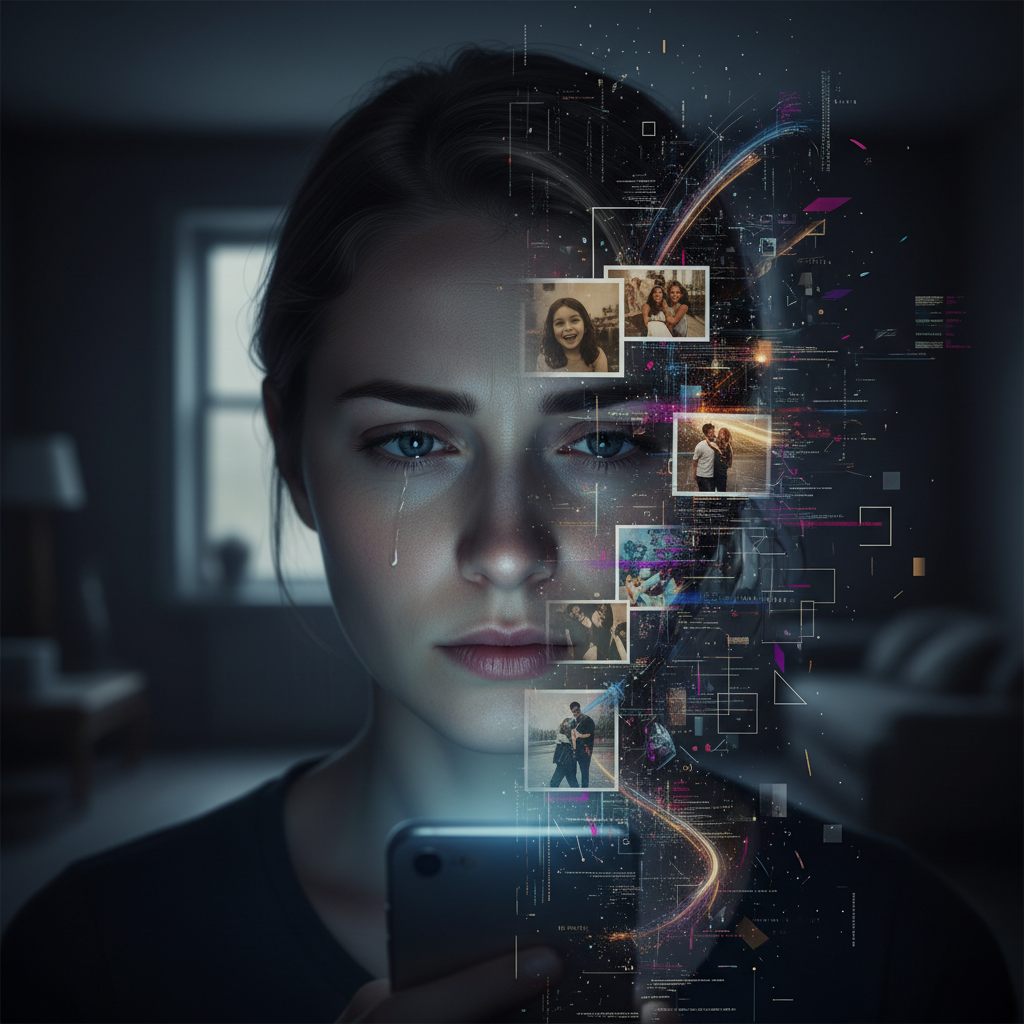
My phone serves me AI-curated 'memories' that erase the nuance of my past. It feels like my life is being algorithmically remastered, and I'm losing my narrative.
This opinion piece was drafted with AI assistance under the editorial direction of Rohan Mehta and reviewed before publication. Views expressed are the author's own.
My phone just tried to sell me a sanitized version of my own past. It happened this morning, as I was waiting for the kettle to boil. A notification bubbled to the top of my screen, cheerful and unsolicited: 'A new memory for you: Goa Trip!'
I tapped, and there it was. A two-minute video montage, set to some relentlessly upbeat, royalty-free synth-pop. There were a half-dozen of us from university, three years younger, frozen in time. Quick cuts of us grinning on scooters, raising glasses at a beach shack, splashing in the sea during a perfect sunset. The algorithm had stitched together a highlight reel of pure, unadulterated joy. It looked like a trailer for a movie about the best holiday you've ever had.
My first reaction, as I'm sure is the intended one, was a warm pang of nostalgia. A little dopamine hit before my first coffee. Look how young we were. Look how happy. But as the montage looped for a second time, the warmth curdled into something else. Something a little unsettling.
Because the Goa trip in the video wasn't the Goa trip I actually remember.
The algorithm, in its quest for a perfect, shareable memory, had conveniently forgotten a few key details. It forgot the ferocious argument my friend Karan and I had on the second night over something trivial, an argument that left a sour taste for a whole day. It forgot that the seafood at that beach shack gave me a mild but memorable case of food poisoning. It forgot the long, quiet bus ride back to the airport where I felt a creeping sense of post-holiday melancholy, wondering what I was even doing with my life.
The AI didn't care about those parts. Those parts don't fit into a tidy, happy narrative. They are the messy, complicated, and deeply human bits that constitute an actual experience. My phone’s AI isn’t a historian; it’s a marketing executive, and it’s been put in charge of my archives.
This is the strange new territory we find ourselves in. Our memories are no longer just our own. They are a collaborative project between our brains and the cloud, and the cloud's co-author is an algorithm with a very specific, commercially-driven agenda. The goal is engagement. A happy memory is a shareable memory. A shareable memory keeps you on the app. A complex, nuanced, or painful memory is inconvenient data. It gets edited out.
It’s not just holidays. The other day, it served me a montage of an old friend. A smiling slideshow titled 'You and Priya Through the Years.' The AI, in its computational innocence, saw thousands of photos of us together and concluded we must be the best of friends. It doesn't know that we haven't spoken in over a year, that our friendship frayed and then snapped under the weight of unspoken resentments and divergent paths. Seeing those smiling pictures, set to tender acoustic music, wasn't heartwarming. It was jarring. It was a digital ghost reminding me of a loss that is still raw. The algorithm doesn't understand endings. It only understands patterns.
I see this happening with our uniquely Indian contexts, too. Last Diwali, my phone created a 'Celebration Highlights' video. It was all diyas, bright new kurtas, and smiling faces holding plates of sweets. It was beautiful. But it wasn't the whole story. It didn't capture the awkward silence when my uncle brought up politics. It didn't show my mother's quiet sadness as she mentioned, for the tenth time, how much she missed her own mother, who we lost two years ago. The algorithm saw the festival; it missed the family.
It’s the same with the grand Indian wedding. The AI will generate a perfect montage of the sangeet, the dances, the finery, the ceremony. It will be a catalogue of peak moments. What it will never comprehend is the background hum of chaos, the frantic negotiations between families, the bride's exhaustion, the groom's nervousness, the tiny moments of absurdity and grace that make a wedding a real event and not just a photo opportunity. The algorithm is curating an Instagram version of my life, for my own consumption.
This isn't an attack on the technology itself. There are times when these automated reminders are genuinely lovely. A picture of my niece when she was a baby, a reminder of a forgotten afternoon with my parents. These can be tiny, unexpected gifts. I am no Luddite; I work in the tech world, and I appreciate the elegance of the engineering that can sift through 100,000 photos and pick out the face of a single person.
But the danger lies in our passive acceptance of this remastered narrative. When we are repeatedly shown a simplified, happier version of our past, does it begin to overwrite the real thing? Memory is already a faulty, malleable thing. We are constantly rewriting our own stories, smoothing the edges, re-casting ourselves as the heroes. Now, we have a powerful tool that actively helps us do it, pushing us always toward the sunny, simple version of events.
It feels like I’m slowly losing control of my own autobiography. My phone has become a co-writer, and its only note is 'make it happier, make it simpler, make it more upbeat.' The subtlety, the texture, the very things that give life its meaning, are being flattened into a shareable asset.
So what is to be done? I’m not deleting my photos or turning off the notifications. That feels like throwing the baby out with the bathwater. Instead, I’m trying to develop a new kind of digital literacy, a literacy of the self.
Now, when my phone serves me a 'memory,' I treat it as a prompt, not a conclusion. I look at the smiling faces from that Goa trip and purposefully recall the argument, the bad seafood, the melancholy. Not to wallow in the negative, but to remember the whole. To honour the complexity. When it shows me pictures of my old friend, Priya, I allow myself to feel the sadness, to acknowledge the loss, instead of just swiping it away. It’s an act of conscious rebellion against the algorithmic simplification of my own heart.
I am taking back the role of editor-in-chief of my own life story. The AI can suggest its edits, but I retain final cut. My phone's AI thinks it knows my memories, but it only knows my data. It can see the smiles, but it can’t see the stories behind them. It can count the number of times I was tagged with a person, but it can’t measure the depth of the connection, or the pain of its absence. My past is more than a dataset to be optimized. And my job, it seems, is to remember that.
Why it matters
- 01AI-curated memory montages often simplify our past, erasing complex emotions and experiences.
- 02This algorithmic remastering can make us feel like we're losing control of our personal narrative.
- 03We can reclaim our memories by consciously remembering the full story beyond the AI's curated highlights.