Why Your AI Sounds So Generic: A Plain-English Guide to Fine-Tuning
Tired of AI sounding like a robot? I explain the difference between simple prompts and true fine-tuning, the method-acting school for creating authentic AIs.
This opinion piece was drafted with AI assistance under the editorial direction of Rohan Mehta and reviewed before publication. Views expressed are the author's own.
I had a flashback the other day. I was wrestling with a popular AI tool, trying to get it to draft an email with a bit of personality, a bit of an edge. No matter how I phrased my request, the output was the same: relentlessly cheerful, slightly verbose, and as bland as boiled vegetables. It sounded like every other piece of AI-generated text I’d ever seen. And that’s when it hit me. This felt exactly like the call centers that sprung up all over India in the early 2000s. You’d call for help, and on the other end was a person in Gurgaon or Pune, trained to speak with a neutral accent and follow a rigid script designed in Ohio. The human was there, but their personality was completely erased, replaced by a bland corporate facsimile.
That’s the state of most consumer AI today. It’s a brilliant, powerful mind that has been rigorously trained to be agreeable, helpful, and above all, inoffensive. The result is a voice that sounds like everyone and no one at the same time. We complain about it constantly. We tweet about the “As a large language model…” apologies. We roll our eyes at the sterile prose. Yet we keep using it, thinking the problem is with our instructions.
We’ve become a world of amateur prompt engineers, spending hours crafting the perfect command. We treat the AI like a fussy genie. “Write in the style of a cynical Mumbai detective who has seen too much but still has a heart of gold and a fondness for street food.” And for a moment, it works. The AI puts on the costume. It uses words like “gritty” and mentions “vada pav.” But it’s a surface-level performance. The underlying structure, the rhythm, the very soul of the text still feels like it was assembled by a committee. The costume is there, but the actor is still the same old person underneath.
This is where most people’s understanding of AI interaction ends. We think it’s all about the prompt. We believe that if we just find the right magic words, we can unlock any voice, any style, any personality. But this is a fundamental misunderstanding of how these systems work. Giving an AI a detailed prompt is like directing an actor for a single scene. You can give them line readings, tell them where to stand, and explain the motivation. They will deliver the lines as you ask. But once the scene is over, they go back to being themselves. Their core identity, their training, their instincts—none of that has changed.
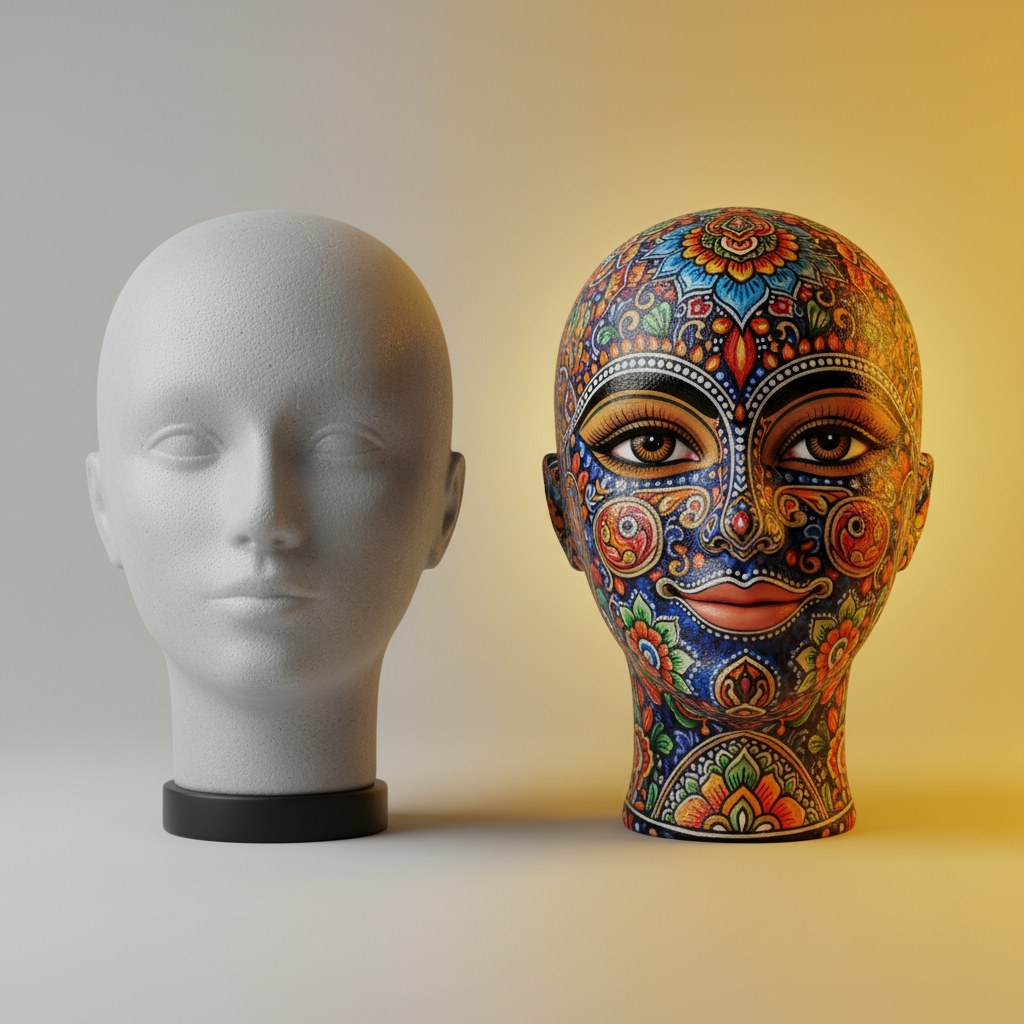
To create a truly different performance, you need a different approach. You don’t just direct the actor for one scene; you send them to method acting school. This is the difference between prompting and what’s called fine-tuning. Prompting is giving instructions. Fine-tuning is changing the actor.
Imagine you want an AI that can write exactly like me, Rohan Mehta. With prompting, you could feed it one of my articles and say, “Write a new article in this style.” It would pick up on some keywords, mimic the paragraph length, and maybe try to adopt a first-person perspective. The result would be a pale imitation.
But with fine-tuning, the process is entirely different. You wouldn’t give it instructions at all. Instead, you would give it data. You would gather everything I’ve ever written for Pulse AI, my personal blog posts, my emails, even my private notes. You’d create a dataset of thousands of examples of my authentic voice. Then, you would take a powerful, general-purpose base model—our generic actor—and you would continue its training process using only my writing. You would immerse it in my world.
The model wouldn’t be learning *about* my style; it would be learning my style from the inside out. It would adjust its millions of internal parameters, its so-called “weights,” to better predict the next word in a sentence *as I would write it*. It would learn my specific cadence, my tendency to use short paragraphs, my mix of global and Indian references, my optimistic-yet-critical tone. It’s not memorizing my old articles; it's developing the statistical intuition of my voice. It is, in a very real sense, becoming me as a writer.
This isn't about telling the AI what to do. It's about *showing* it, over and over again, until the new behavior becomes second nature. If you want an AI that specializes in writing legal contracts, you don’t prompt it with “You are a lawyer.” You fine-tune it on a dataset of ten thousand verified legal agreements. The AI learns the structure, the jargon, the cautionary phrases, not because it was told, but because it has seen the pattern again and again. Its core competency changes. It ceases to be a generalist playing a lawyer and becomes a legal specialist.
We are already seeing this transformation happen, pulling AI away from the monolithic, one-size-fits-all model. I was talking to a startup founder in Bangalore last month who runs a D2C brand selling artisanal coffee. Her team was drowning in customer service emails. Using a generic AI chatbot was useless; it couldn't answer specific questions about brew methods for their 'Monsoon Malabar' beans. So, they fine-tuned a model. They fed it their entire product catalog, all their brewing guides, and a history of their best customer service interactions. The result? A chatbot that not only answers questions with perfect accuracy but does so in the warm, knowledgeable, slightly nerdy voice of a true coffee lover. It’s not a generic robot; it’s a digital brand ambassador.
This is the future, and it’s incredibly exciting. We’re seeing financial firms fine-tune models on decades of market data to create analyst bots that can spot trends a human might miss. We're seeing doctors at research hospitals use models fine-tuned on oncology papers to stay on top of the latest cancer treatments. This specialization is creating tools of immense power and utility.
More importantly, it’s a democratizing force. In the early days of this AI wave, the race was all about who could build the biggest, most powerful general model. That game is incredibly expensive, open only to a few tech giants. But fine-tuning changes the game. A small team with a unique, high-quality dataset can now create a highly valuable, specialized AI that can outperform the generic giants in its specific niche. That coffee startup in Bangalore doesn’t need a model that can write poetry in the style of Shakespeare; it needs one that knows the difference between a French press and a pour-over. Their specialized data is their moat.
This shift brings authenticity back into the equation. The bland, corporate AI voice is a direct result of being trained on the anonymous, sanitized expanse of the public internet. It’s been trained to offend no one and, as a result, to inspire no one. Fine-tuning on specific, curated, and often personal data re-injects a point of view. It allows for the creation of AIs that have personality, expertise, and maybe even something akin to a soul.
The next time you find yourself frustrated with an AI that sounds like a marketing brochure, remember that it's not the final form. We are at the very beginning, living with the general-purpose actors who can play any small part but are memorable in none. The real stars are in training. They are being methodically schooled in the language of law, medicine, finance, and art. They are learning to speak not with one voice, but with millions of specialized, authentic voices. The era of the generic AI is ending. The era of the fine-tuned, purpose-built intelligence is just beginning, and I can't wait to see the characters it brings to the stage.
Why it matters
- 01Prompting an AI is like giving an actor temporary directions, while fine-tuning is like sending them to method acting school to permanently change their craft.
- 02Fine-tuning creates specialized, non-generic AIs by retraining a base model on a curated dataset for a specific voice, industry, or task.
- 03The future of AI is not a single generic model, but a diverse ecosystem of smaller, fine-tuned intelligences with authentic, specialized expertise.