Your AI Is Getting a To-Do List: A Guide to AI Agents
We've used AI to get advice, but the next step is getting things done. AI Agents are coming, able to access your apps to book flights, manage calendars, and more.
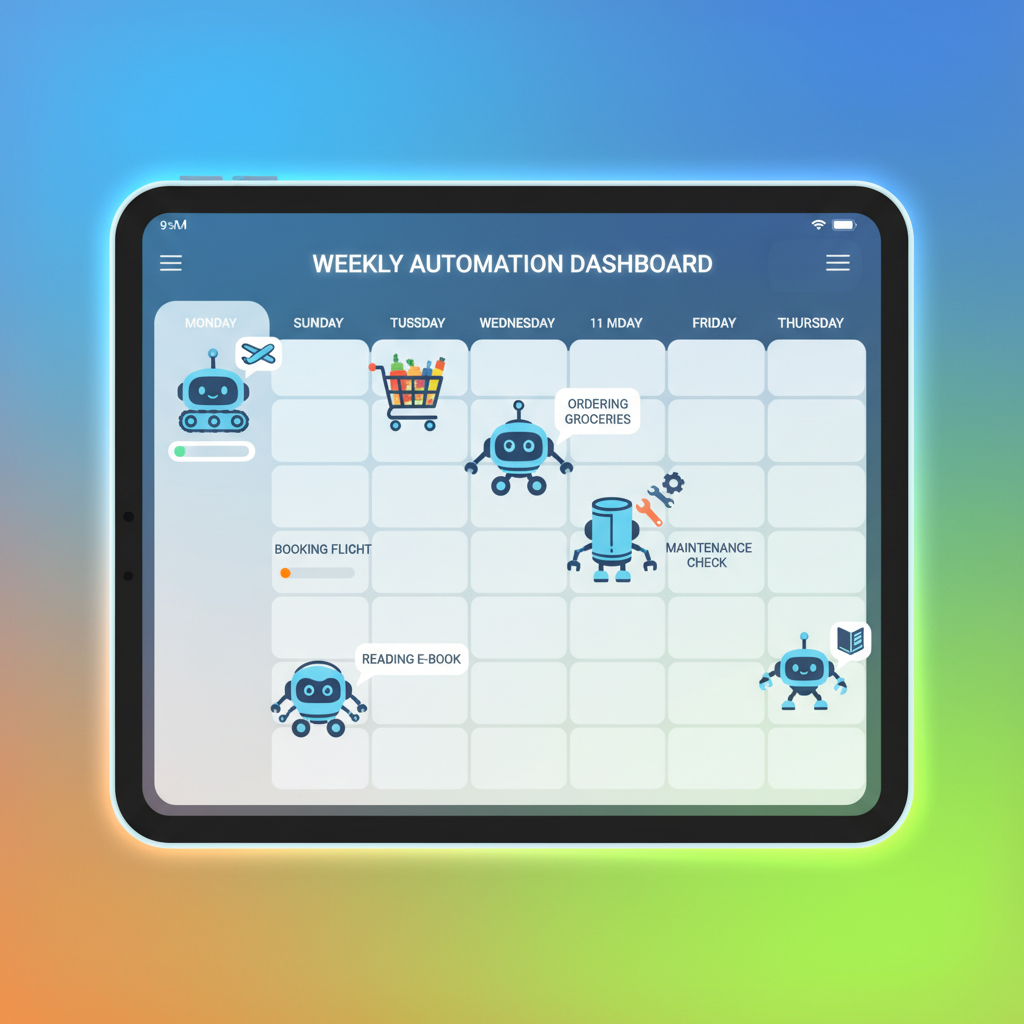
This opinion piece was drafted with AI assistance under the editorial direction of Rohan Mehta and reviewed before publication. Views expressed are the author's own.
Last month, I spent the better part of a Sunday afternoon planning a short getaway for my wife and me. The process felt like a digital steeplechase. I started by asking a chatbot for ideas: “Suggest a relaxing 3-day trip from Mumbai in August.” It gave me a lovely list—Lonavala, Goa, even a quiet resort near Alibaug.
Then began the real work. I took the chatbot’s suggestion of a specific hotel in Goa and opened a dozen tabs. One for the hotel’s website, one for MakeMyTrip to compare prices, another for TripAdvisor reviews. I opened Google Flights to check airfares, juggling dates to see if a Thursday departure was cheaper than a Friday. Then I opened my own calendar, and my wife’s shared calendar, to find a weekend that worked for both of us. Finally, after an hour of this digital ballet, I drafted an email to my wife with the options. “What do you think of this?”
Every step of the way, I was the human glue. I was the one copying information from one window and pasting it into another. The AI was a smart, but passive, advisor. It could give me a recipe, but it couldn’t cook the meal. This is the fundamental limitation of the AI we’ve all gotten used to over the past couple of years. It’s brilliant, but it’s trapped behind the glass of a chat window. That, however, is about to change dramatically.
The next great leap in artificial intelligence isn’t about making the models incrementally smarter, but making them more capable. We’re moving from AI as an advisor to an AI as an assistant—or more accurately, an agent. This isn’t just a change in terminology; it’s a profound shift in function. An AI agent is a system that can’t just tell you how to do something; it can actually do it for you.
Think of it this way. Your current chatbot is like a research intern. You can ask it to find the best flight options, and it will return a list. An AI agent is like a seasoned executive assistant. You tell it, “Book me the most convenient and cost-effective round-trip flight to Delhi for my meeting next Tuesday, and make sure it’s a morning flight there and an evening flight back. Add it to my calendar and send the confirmation to my email.” You state the goal, and the agent handles the execution.
These agents work by breaking down a complex request into a series of smaller, logical steps. When you give it a goal, the first thing the agent does is reason and plan. “Okay,” it thinks, “to book this flight, I first need to check Rohan’s calendar for his exact availability on Tuesday. Then I need to access a flight booking portal. I’ll search for Mumbai to Delhi flights on the specified date. I’ll filter for morning departures and evening returns. I’ll compare the prices and flight times across IndiGo, Vistara, and Air India. Once I find the optimal one, I’ll need his payment information and passport details. After booking, I’ll need to access his Google Calendar to create an event, and then his Gmail to send a confirmation.”
This ability to use ‘tools’ is the secret sauce. For an AI, a tool is any other piece of software it can connect to, usually through something called an API. Your calendar has one, your email has one, ride-hailing apps have them, e-commerce sites like Amazon have them, and travel portals like Expedia have them. An AI agent is given permission to access a set of these tools. It’s no longer just a language processor; it’s a software operator.
What makes this truly powerful is the agent’s ability to self-correct. Let's say it searches for flights and the only morning option is on a business-unfriendly airline or is outrageously expensive. A simple script would fail. But an agent can reason, “This option doesn’t meet the ‘cost-effective’ criteria. My next step should be to check flights on Monday evening instead, and see if I can find a hotel for him near the airport.” It adapts its plan based on new information, just like a person would.
Let’s replay my Goa trip planning nightmare with an agent. I would simply say, “Plan a relaxing 3-day weekend for me and my wife in Goa for a weekend in August. Our budget is ₹50,000 for flights and a 4-star-or-above hotel. Prioritise a property with a pool and good reviews for couples. Present me with three complete options, including flights from Mumbai and hotel packages.”
The agent would then go to work, interfacing with all the different apps and websites I had to juggle manually. It would check my calendar, find a free weekend, search for flights, cross-reference hotel availability and pricing, read summaries of recent reviews, and finally present me with three fully-formed packages. All I’d have to do is review and say, “Book option two.” The agent would then proceed to make the bookings using my stored information and add the entire itinerary to our calendars.
The possibilities extend far beyond travel. Imagine a sales professional with an agent integrated into their work email and CRM. They could set a rule: “For any high-value lead I haven’t contacted in 30 days, draft a personalised follow-up email that references our last conversation and suggests a time to reconnect next week based on my calendar availability. Show me the draft for approval before sending.” This automates the tedious but crucial work of nurturing relationships.
Closer to home, an agent could manage my monthly household expenses. It could monitor my emails for bills from my internet provider, credit card companies, and my child's school. It could then check the due dates, queue up payments via UPI, and send me a single notification on my phone: “I’ve prepared payments for this month’s three bills, totaling ₹8,500. Tap here to approve.” One tap, and it’s all done.
Unsurprisingly, every major tech company is racing to build this future. Google’s recent ‘Project Astra’ demo showed an AI agent looking at code on a screen and explaining what it does, implying it could also help write and execute it. Microsoft is weaving its ‘Copilots’ deeper into the fabric of Windows and Office, aiming for them to one day not just draft a PowerPoint slide, but build the entire presentation from a simple prompt. Then you have startups like Adept and Imbue, which have raised hundreds of millions of dollars to build the foundational models for these agents. The ambition is clear: the next interface for computing is not a screen of apps, but a single, conversational agent that operates them on your behalf.
Of course, this vision comes with a formidable set of challenges. The most obvious one is security and trust. Giving an AI agent access to your email, calendar, and financial accounts is a terrifying prospect for most people, and for good reason. We’re not just giving it data; we’re giving it the power to act. A mistake is no longer a funny ‘hallucination’ in a poem; it’s a non-refundable flight booked to the wrong continent or a bank transfer sent to the wrong person.
Before we get comfortable with this, we need bulletproof security and, just as importantly, new models of user control. I don’t want my agent to have a blank cheque. I’ll want granular permissions. It can read my calendar but can’t delete events without permission. It can draft an email to my boss but can’t send it without my explicit approval. We will need elegant ‘approval workflows’ that don’t create more friction than they remove.
Then there is the problem of reliability. Language models are still probabilistic. They guess the next best word. This is fine when you’re writing an essay, but it's not okay when you’re executing a command to buy a stock or pay a bill. An agent that 'hallucinates' an action could have catastrophic results. The systems will need to achieve a level of reliability that is orders of magnitude higher than what we see today. They need to know what they don’t know and when to stop and ask their human user for clarification.
Despite these hurdles, the direction of travel is clear. For two decades, the promise of technology was ‘there’s an app for that.’ We downloaded hundreds of apps, creating a new kind of digital labour for ourselves—the work of managing the apps. The promise of AI agents is to finally erase that labour. It’s a shift from us serving the machine’s logic of taps, clicks, and menus, to the machine understanding and executing our human intent.
We are on the cusp of moving from being computer operators to being computer directors. We won't be telling the machine which buttons to press. We'll be telling it what we want to achieve. That’s a future that goes far beyond simply having a better search engine or a cleverer chatbot. It’s about fundamentally changing our relationship with technology itself.
Why it matters
- 01AI agents are autonomous systems that can take action across different apps, not just provide information in a chat window.
- 02They work by breaking down a user's goal into a series of steps and using other software tools, like calendars or booking sites, to execute them.
- 03While incredibly powerful, major challenges around security, user control, and reliability must be solved before agents become a mainstream reality.