Your Phone Has a New Brain: What Is an NPU and Why Should You Care?
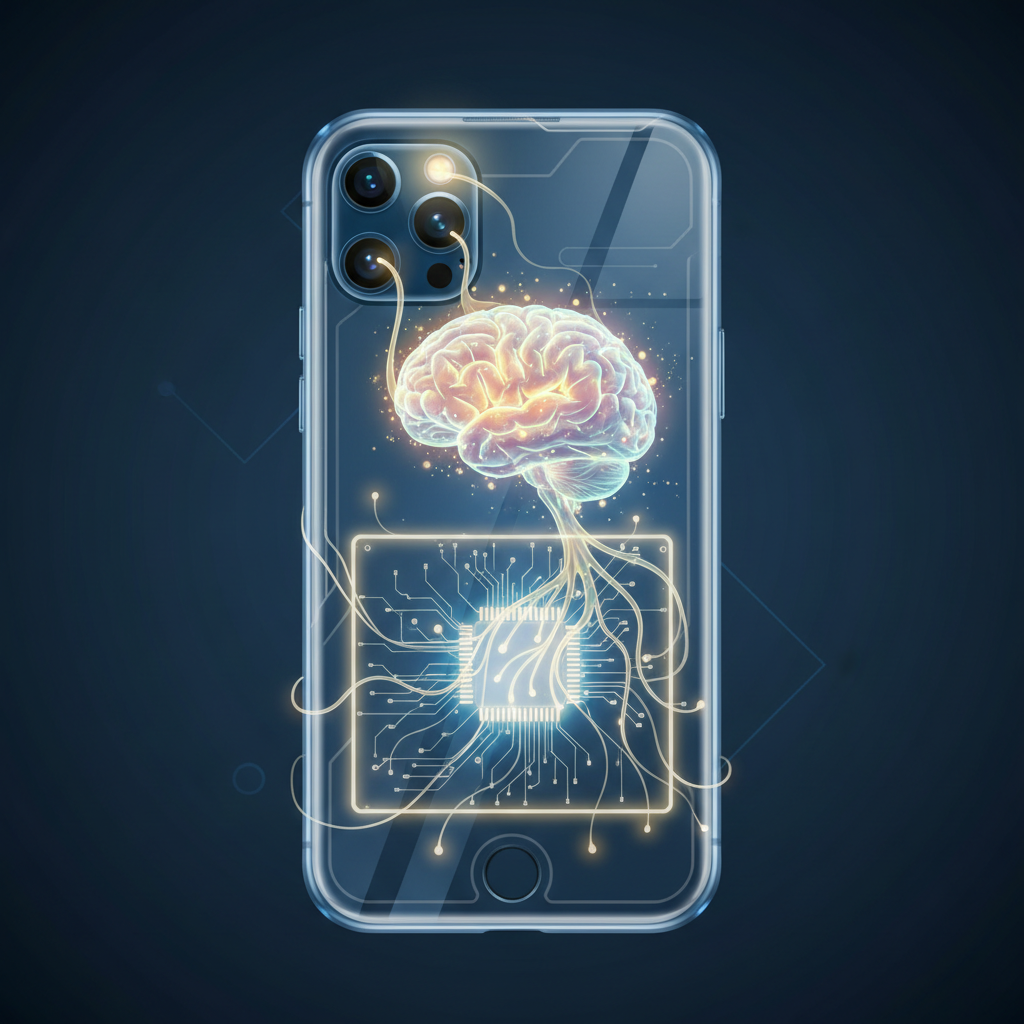
You see NPU advertised on new phones, promising AI magic. I'll explain what this 'AI brain' is, how it's different from a CPU or GPU, and why it matters.
This opinion piece was drafted with AI assistance under the editorial direction of Rohan Mehta and reviewed before publication. Views expressed are the author's own.
A few weeks ago, I found myself in a crowded electronics store in Delhi, looking at the shiny new flagship phones. The salesman, a young guy brimming with enthusiasm, kept repeating a new mantra. It wasn't about megapixels or gigahertz anymore. For every device, whether it was a Samsung, a Google Pixel, or the latest offering from a Chinese brand, the pitch was the same: “Sir, this has next-gen AI. It has a dedicated NPU.”
He said ‘NPU’ with a kind of reverence, as if it were a magic key unlocking a new dimension of technology. I’ll admit, even as someone who writes about this stuff for a living, the relentless buzz around AI can be exhausting. It feels like a marketing term that’s been slapped onto everything. But the NPU, or Neural Processing Unit, isn’t just jargon. It’s arguably the most significant hardware shift inside our phones in nearly a decade, and it’s the reason your device is about to get a whole lot smarter.
To understand what it is, and more importantly, what it does, I want you to forget about silicon chips for a moment and think about your kitchen.
Imagine your phone's main processor, the System-on-a-Chip (SoC), is a complete kitchen setup. The CPU, or Central Processing Unit, is your main chef’s knife. It’s a versatile, brilliant tool. You can use it for almost anything: chopping onions, dicing carrots, slicing meat, mincing garlic. It’s precise and reliable. For decades, the CPU has been the hero of computing, handling everything from opening an app to sending a text.
Then you have the GPU, or Graphics Processing Unit. Think of this as a food processor. It’s not as versatile as a chef’s knife, but it’s a powerhouse for specific, repetitive tasks. If you need to chop one onion, the knife is fine. If you need to chop twenty onions for a big dinner party, the food processor will do it all at once, in a fraction of the time. This is called parallel processing. GPUs were originally designed for rendering graphics in video games—a task that involves calculating the color of millions of pixels simultaneously—but it turns out that their parallel nature is also quite good for certain types of AI calculations.
Now, here comes the modern challenge. Let’s say you’re preparing a complex dish, perhaps an elaborate biryani, that requires a finely ground mix of very specific spices. You could try to crush them with the flat side of your chef's knife (the CPU). It would be slow, clumsy, and the result would be inconsistent. You could throw them in the food processor (the GPU). It might work, but it’s overpowered, noisy, and uses a ton of electricity just to grind a small handful of cloves and cardamom. It’s inefficient.
What you really want is a dedicated spice grinder. A small, quiet, efficient machine designed for one job and one job only: turning hard spices into a fine powder, perfectly and with minimal effort. That, in a nutshell, is the NPU.
The ‘spices’ in this analogy are the unique mathematical operations that form the backbone of modern artificial intelligence and machine learning. These operations, mostly a type of math called matrix multiplication and vector calculations, are the building blocks of how a neural network ‘thinks’. A neural network, inspired by the human brain, learns to recognize patterns, whether it’s the words you’re speaking, the face in a photo, or the subject of a video.
An NPU is a piece of silicon architected from the ground up to perform these specific AI calculations at lightning speed while consuming a tiny amount of power. A CPU does these calculations one-by-one. A GPU can do a bunch in parallel. An NPU is designed with thousands of tiny, specialized cores that do nothing but this one type of math, all day long, with incredible efficiency. It’s not about being a generalist; it’s about being a world-class specialist.
This specialization is the reason NPUs have suddenly become the headline feature. For years, most of the ‘AI’ on your phone wasn’t actually happening there. When you used a voice assistant or a photo-enhancing filter, your phone would often package up the data, send it to a powerful server in the cloud, let that server do the heavy lifting, and then receive the result. The NPU changes this entirely.
It enables powerful AI to run directly on the device, or ‘on-device’. This has three massive benefits: speed, privacy, and accessibility. Speed, because there’s no lag from sending data to a server and waiting for a response. The action is instantaneous. Privacy, because your personal data—your photos, your voice commands, your location—never has to leave your phone. And accessibility, because these features work even when you have a poor internet connection or are completely offline.
I saw this in action recently. A friend of mine, using one of the new Samsung S24 phones, was having a conversation with a tourist from Spain right here in Khan Market. He spoke in Hindi, and the phone produced a Spanish translation in real-time, and vice-versa. There was no noticeable delay. This magical experience wasn't happening on a server in California; it was happening inside the NPU in his hand. It required no data connection. To me, that feels like a more significant leap than a slightly faster app-loading time.
This on-device processing is especially critical from an Indian perspective. Data connectivity can still be spotty in many parts of the country, and concerns about data privacy are growing louder everywhere. The ability to perform intelligent tasks without depending on a cloud connection is not just a convenience; it's a fundamental improvement in utility.
Apple has been quietly building its 'Neural Engine' (their name for an NPU) into iPhones for years. It's the silent workhorse behind features like Face ID, which maps your face in 3D, and an amazing feature called Live Text, which lets you copy and paste text directly from a photo. When your iPhone keyboard suggests the next word with uncanny accuracy, that’s the NPU predicting your thoughts based on your past writing style, all done securely on your device.
On the Android side, Google’s Pixel phones use their Tensor chip’s NPU for astounding photography tricks like Magic Eraser, which lets you remove unwanted people or objects from your photos with a simple tap. It feels like magic, but it’s just highly-optimized math running on a specialized processor.
The real revolution, however, is yet to come. Today, the NPU is mostly used for photography, language translation, and transcription. But its potential is far greater. The end game is a truly personal AI assistant that lives entirely in your pocket.
Imagine an assistant that doesn't need to send your every query to a corporate server. One that has a deep, contextual understanding of your life because it has access to your calendar, emails, and messages, but processes it all locally and privately. It could summarize your morning emails based on what it knows about your priorities for the day. It could screen your calls with genuine intelligence, understanding the urgency of the context. It could even proactively monitor health data from your watch, using its pattern-recognition prowess to spot anomalies, all without your sensitive health information ever being uploaded to the cloud.
This is the future the NPU unlocks. It moves us away from the ‘connected’ cloud and brings intelligence back to the personal device, making it truly personal again. Your phone stops being a simple window to the internet and starts becoming an intelligent companion that works for you, with you, and in total privacy.
So, the next time a salesperson tells you a phone has an NPU, you can nod knowingly. It's not just another three-letter acronym. It isn't just for 'AI Magic'. It’s the dedicated spice grinder in the kitchen of your phone. It doesn't replace the chef’s knife or the food processor, but it enables a whole new level of culinary—and computational—sophistication. It's the quiet, efficient brain that is finally making our smartphones genuinely intelligent.
Why it matters
- 01An NPU is a specialized chip in your phone designed to run AI tasks with incredible speed and power efficiency.
- 02Unlike a general-purpose CPU or GPU, the NPU excels at the specific math used in machine learning, like a spice grinder excels over a knife for grinding spices.
- 03This chip enables powerful features like real-time translation and advanced photo editing to run directly on your device, improving speed, privacy, and offline capability.